
© copyright by Goran Pavlovic;
© tłumaczenie Czesław Białczyński
© komentarz Czesław Białczyński
[1CB – zamieszczam tylko jeden ogólny komentarz na końcu pod tym artykułem]
In my post „Two crosses” I talked about the division of the solar year using solar cross (solstices and equinoxes) and earth cross (quarter days). The second solar year devision is at the core of the Celtic and Serbian calendar.
W moim poście „Dwa krzyże” pisałem o podziale roku słonecznego za pomocą krzyża słonecznego (przesilenia i równonoce) oraz krzyża ziemskiego (ćwierćdni). Drugi podział roku słonecznego stanowi rdzeń kalendarza celtyckiego i serbskiego.
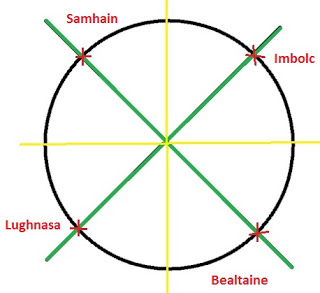
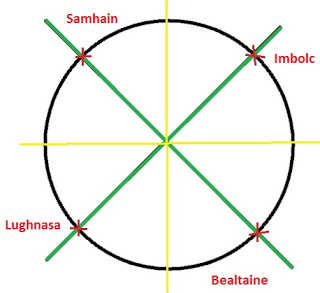
In Celtic calendar the year is divided into two main parts (white and dark part of the year) by Bealtaine – the beginning of the summer and Samhain – the beginning of the winter.
W kalendarzu celtyckim rok podzielony jest na dwie główne części (jasną i ciemną część roku) przez Beltaine – początek lata i Samhain – początek zimy.
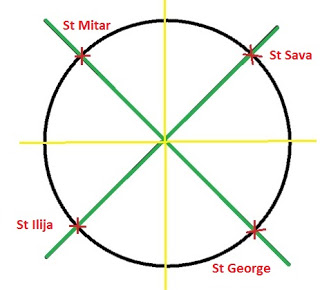
In Serbian calendar the year is divided into two main parts (white and dark part of the year) by St George’s day – the beginning of the summer and St Mitar’s day – the beginning of the winter.
W kalendarzu serbskim rok podzielony jest na dwie główne części (jasną i ciemną część roku) przez dzień św. Jerzego – początek lata i dzień św. Mitara – początek zimy.
For sheep herders in Serbia these two dates had special meaning.
Dla pasterzy owiec w Serbii te dwie daty miały szczególne znaczenie.
The beginning of the white part of the year, St George’s day, was the time of the year when lambing season was officially over. Lambs were separated from their mothers and milking season began. This was also the time when sheep were driven to the highland pastures where they would spend summer and autumn.
Początek jasnej części roku, dzień św. Jerzego, był porą roku, w której oficjalnie kończył się okres jagnienia. Jagnięta oddzielano od matek i rozpoczynał się okres dojenia. W tym czasie owce wypędzano na górskie pastwiska, gdzie spędzały lato i jesień.
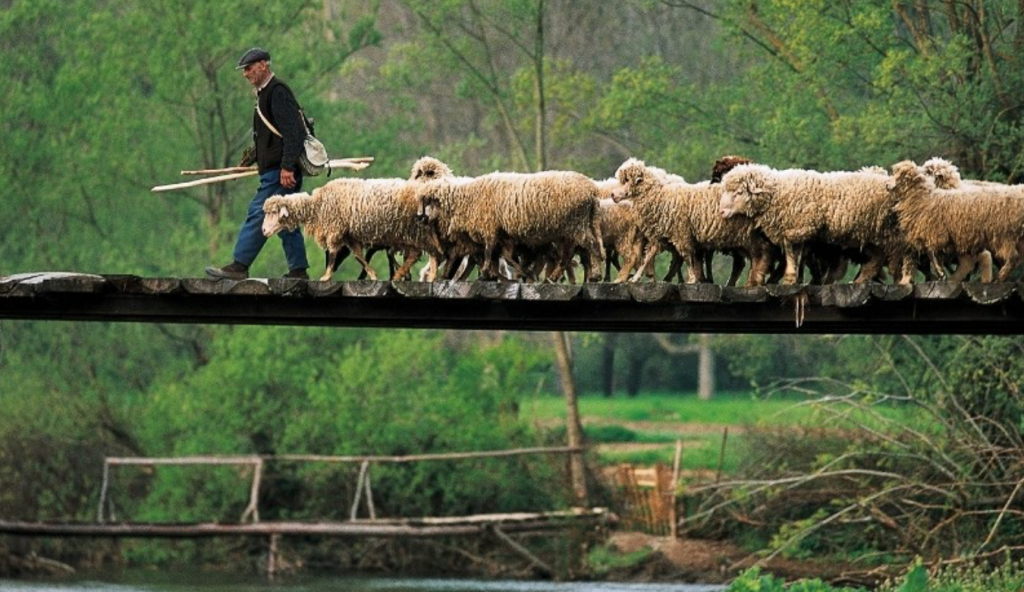
The end of the white part of the year, St Mitar’s day, was the time when the milking season ended and the sheep were driven back down into the valleys where they would spend the winter and spring.
Koniec jasnej części roku, dzień św. Mitara, był czasem, kiedy kończył się sezon dojenia, a owce pędzono z powrotem w doliny, gdzie spędzały zimę i wiosnę.
Serbian customs and rituals related to the St George’s day are mostly remnants of the old pagan religion which was replaced by Christianity. And in the old pagan religion, St George was known as Jarilo, the bright, burning, scorching one. Interestingly the Celtic counterpart of Jarilo’s day, Beltane means „the day of the bright fire”…
Serbskie zwyczaje i rytuały związane ze świętem św. Jerzego to w większości pozostałości po dawnej religii pogańskiej, którą zastąpiło chrześcijaństwo. W dawnej religii pogańskiej św. Jerzy był znany jako Jaryło, czyli jasny, płonący, palący. Co ciekawe, celtycki odpowiednik dnia Jaryły, Beltane, oznacza „dzień jasnego ognia”…
These rituals start on the day before St George’s day.
Te rytuały rozpoczynają się w dniu poprzedzającym dzień św. Jerzego.
The day starts early in the morning when young men and women go to the meadows and forests to pick medicinal herbs and flowers. The girls would then take the medicinal herbs and flowers to the nearest flowing water where they would make wreaths.
Dzień zaczyna się wcześnie rano, kiedy młodzi mężczyźni i kobiety udają się na łąki i do lasów, aby zbierać zioła lecznicze i kwiaty. Dziewczęta następnie zanoszą zioła lecznicze i kwiaty do najbliższego płynącego strumienia, gdzie plotą wianki.
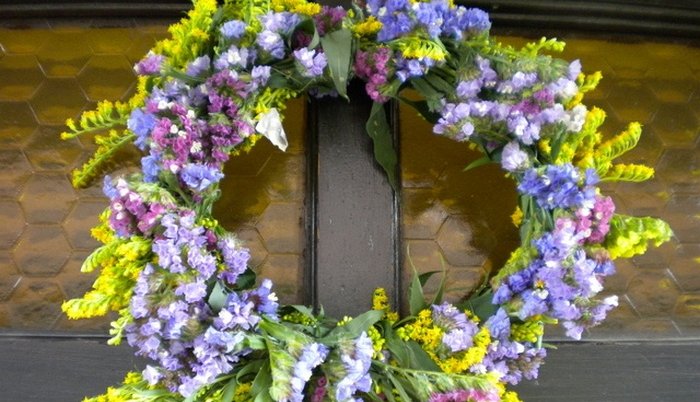
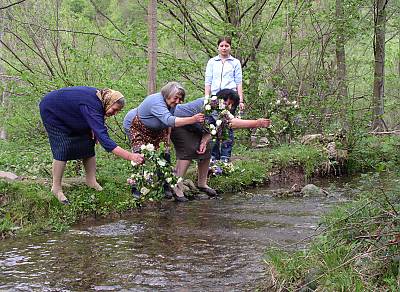
Some of these wreaths were ceremonially „drowned” (thrown) in the river as an offering. Girls would also spray each other with water.
Niektóre z tych wieńców były ceremonialnie „topione” (rzucane) do rzeki jako ofiara. Dziewczęta również oblewały się nawzajem wodą.
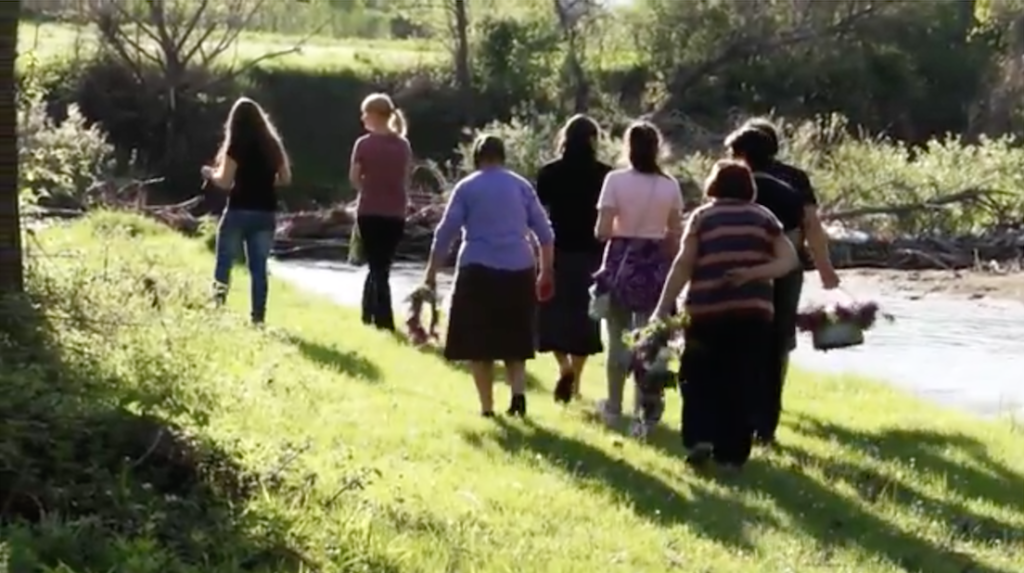
The other wreaths were brought home.
Pozostałe wieńce przynoszono do domu.
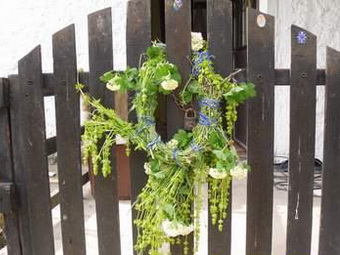
At home, one of these flower wreaths was hang on the house gate.
Jeden z tych wianków z kwiatów wieszano na bramie do posesji.
Some were hang to dry and were then kept in the house until the next St Georges day and the medicinal herbs were used when needed.
Niektóre wieszano do wyschnięcia, a następnie przechowywano w domu do następnego dnia św. Jerzego, a zioła lecznicze stosowano w razie potrzeby.
At the same time the woman of the house would make a special solar bread called „kravaj” which also looks like a wreath. The bread could be any size as long as it has a hole in the middle.
W tym samym czasie gospodyni piekła specjalny chleb słoneczny zwany „kravaj”, który również wyglądał jak wianek. Chleb mógł mieć dowolny rozmiar, pod warunkiem, że miał dziurkę w środku.
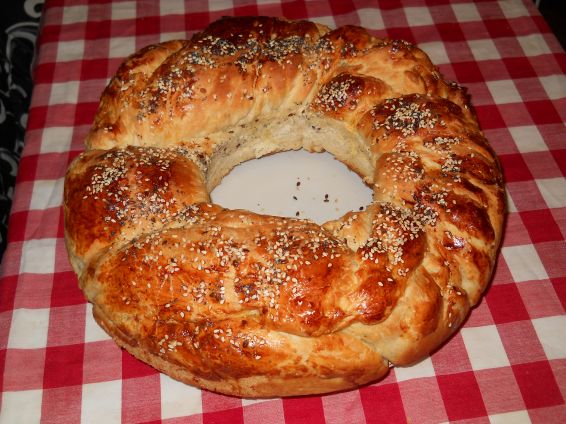
Two were used during „premlaz”, the ritual first milking of the year which is always done the day before St George’s day and which marks the beginning of the milking season.
Dwa używano podczas „premlaz”, rytualnego pierwszego dojenia w roku, które zawsze odbywało się dzień przed dniem św. Jerzego i które oznaczało początek sezonu dojenia.
This is how this milking ritual was done:
Tak wyglądał ten rytuał dojenia:
First an Easter egg, which was specially saved for this purpose, was placed on the ground inside the sheep pen. Then the milking pot was placed on top of the egg and one of the flower wreaths was placed around it. Then one of the sheep which just had their first lamb was selected and the second flower wreath was put around it’s neck. Then the sheep was brought to the milking pot and was milked through the hole of the „kravaj” bread.
Najpierw jajko wielkanocne, specjalnie zachowane w tym celu, kładziono na ziemi w owczarni. Następnie garnek do dojenia stawiano na jajku i wokół niego umieszczano jeden z wieńców kwiatowych. Następnie wybierano jedną z owiec, która właśnie urodziła pierwsze jagnię, i zakładano jej na szyję drugi wieniec kwiatowy. Następnie owcę przyprowadzano do garnka do dojenia i dojono przez otwór w chlebie „kravaj”.
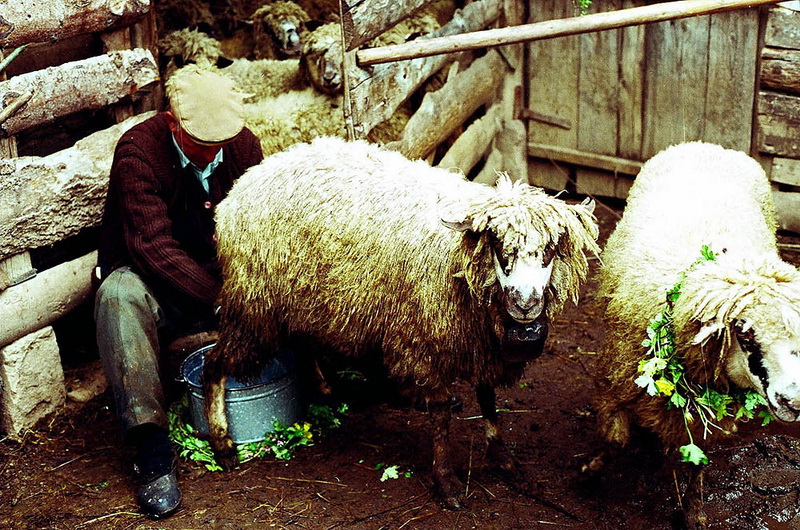
This milk was used to make the first cheese of the year.
Z tego mleka robiono pierwszy ser w roku.
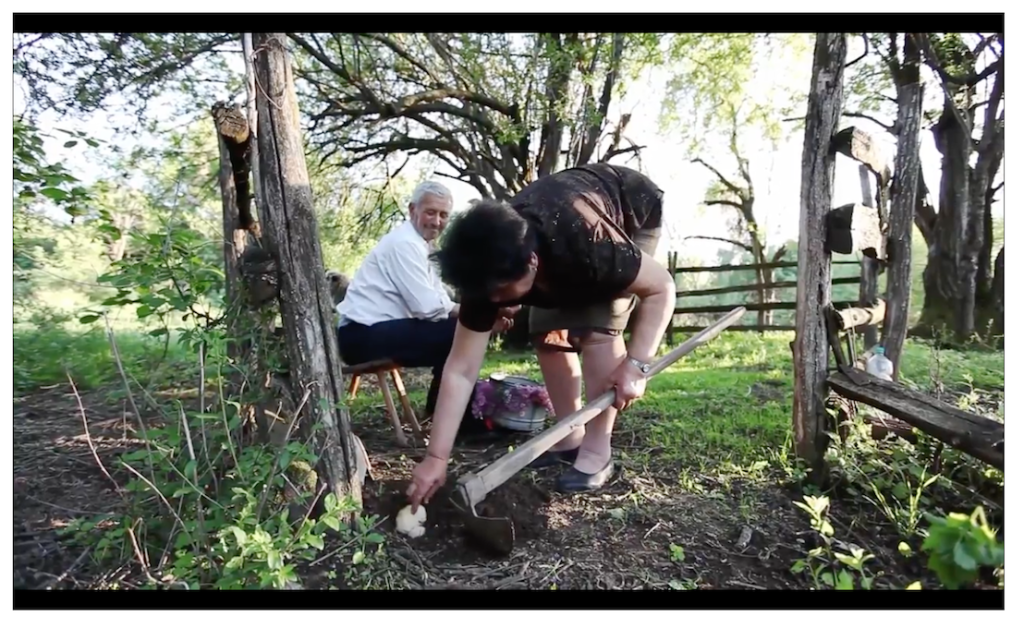
After the milking was done, the egg and the bread were buried inside an ant hill. So the sheep will multiply like ants.
Po dojeniu jajko i chleb zakopywano w mrowisku. Dzięki temu owce rozmnażały się jak mrówki.
This cheese made from the first milk (only one day old), was used the next day (St George’s day) to make belmuž, a votive meal which is always made by male shepherds.
Ten ser, zrobiony z pierwszego mleka (zaledwie jednodniowego), następnego dnia (w dzień św. Jerzego) wykorzystywano do przygotowania belmužu, posiłku wotywnego, który zawsze przygotowywali pasterze.
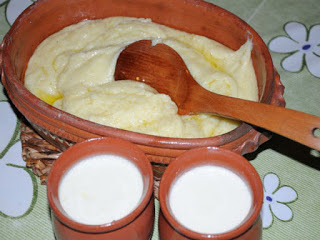
Here is the belmuž recipe:
Oto przepis na belmuž:
Salt a drained lump of sheep cheese which must not be more that two days old. Put it in a cauldron over a fire and constantly stir until it melts down into „foam”. Then get the cauldron off the fire and put it next to the hearth on the heated stones. Add corn flour to the melted cheese and continue to stir with „curak” (wooden spoon) until it is well „baked” and butterfat is released. The dish is best served hot.
Posól odsączony kawałek sera owczego, który nie może być starszy niż dwa dni. Włóż go do kotła na ogniu i stale mieszaj, aż roztopi się w „pianę”. Następnie zdejmij kocioł z ognia i postaw go obok paleniska na rozgrzanych kamieniach. Dodaj mąkę kukurydzianą do roztopionego sera i kontynuuj mieszanie „curakiem” (drewnianą łyżką), aż ser dobrze się upiecze i wydzieli tłuszcz. Danie najlepiej smakuje na gorąco.
This meal was ceremonially eaten by the shepherds „so that sheep would have a lot of milk”.
Ten posiłek był ceremonialnie spożywany przez pasterzy, „aby owce miały dużo mleka”.
The main St George’s custom however was the sacrificial slaughter of a lamb which was dedicated to St George. This sacrifice was originally dedicated to Jarilo. Every house which had sheep had to sacrifice a lamb. On the morning of the St George’s day, the man of the house would go to the sheep pen. He would pick a healthy male lamb and would mark it as a sacrificial animal by putting a flower wreath around its neck. He would then light a candle on its right horn and would give the animal some salt to lick. He would then cross himself three times and say: „It is not me who is killing you, it is St George’s day”. Originally this was probably: „It is not me who is killing you, it is Jarilo who is killing you”.
Głównym zwyczajem w dniu św. Jerzego było jednak ofiarne zabicie baranka, poświęconego św. Jerzemu. Ofiara ta pierwotnie była poświęcona Jarylowi. Każdy dom, w którym były owce, musiał złożyć w ofierze baranka. Rankiem w dzień św. Jerzego gospodarz domu udawał się do owczarni. Wybierał zdrowego baranka i oznaczał go jako zwierzę ofiarne, zakładając mu na szyję wianek z kwiatów. Następnie zapalał świecę na jego prawym rogu i dawał zwierzęciu trochę soli do oblizania. Następnie trzykrotnie żegnał się i mówił: „To nie ja cię zabijam, to dzień św. Jerzego”. Pierwotnie prawdopodobnie brzmiało to: „To nie ja cię zabijam, to Jaryło cię zabija”.
The slaughtering of the lamb was usually done near a flowing water.
Zabijanie baranka zazwyczaj odbywało się w pobliżu płynącej wody.
During the slaughtering of the lamb, people tried not to spill any blood on the ground. This blood was considered sacred and was believed to have magical properties. It was collected in a dish. Girls smeared this blood on their faces „to be healthy and beautiful”. Some of the blood was also smeared on houses to protect them from „evil spirits”.
Podczas zabijania baranka starano się nie rozlać krwi na ziemię. Krew ta była uważana za świętą i wierzono, że ma magiczne właściwości. Zbierano ją do naczynia. Dziewczęta smarowały nią swoje twarze, „aby być zdrowymi i pięknymi”. Część krwi rozsmarowywano również na domach, aby chronić je przed „złymi duchami”.
The rest of the blood was mixed with flowers from the flower wreath which was used to mark the sacrificial lamb, crumbled „kravaj” bread through which the first milk was milked and crushed Easter egg on which the milking pot was placed (both were dug out of the ant hill), and some grain seeds and and grass. This mix was then fed to all the animals, „to protect them from disease and to ensure their fertility”.
Resztę krwi mieszano z kwiatami z wieńca kwiatowego, który służył do oznaczania ofiarnego baranka, pokruszonym chlebem „kravaj”, z którego wydojono pierwsze mleko, oraz z rozgniecionym jajkiem wielkanocnym, na którym stawiano garnek do dojenia (oba wygrzebywano z mrowiska), a także z nasionami zbóż i trawą. Tą mieszanką karmiono następnie wszystkie zwierzęta, „aby chronić je przed chorobami i zapewnić im płodność”.
The lamb was then roasted on a spit and was eaten by the whole family usually outside in a meadow next to a river. This photo taken in 1930 in Banja Koviljaca is showing a family having Djurdjevdan lunch with roast lamb on the spit as the main dish.
Baranka pieczono na rożnie i spożywano całą rodziną, zazwyczaj na łące nad rzeką. To zdjęcie z 1930 roku w Banja Koviljaca przedstawia rodzinę jedzącą obiad Djurdjevdan, którego daniem głównym była pieczona jagnięcina na rożnie.
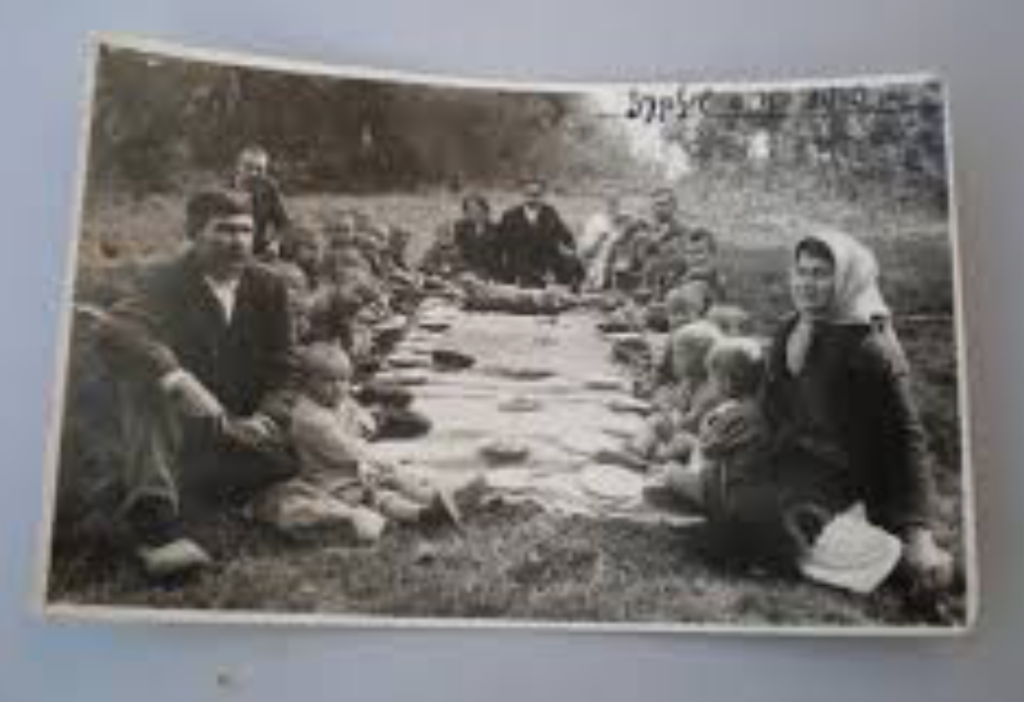
While Djurdjevdan lamb sacrifice was in most areas a family sacrifice, in Eastern Serbia, in the Stara Planina (Old Mountain) region, a collective lamb sacrifice was also performed by the whole village together.
Podczas gdy ofiara jagnięca Djurdjevdan była w większości regionów ofiarą rodzinną, we wschodniej Serbii, w regionie Stara Płanina (Stare Góry), zbiorowa ofiara jagnięca była również składana przez całą wieś. razem.
Old Mountain is the Serbian name for Balkan Mountains. These mountains contain some of the best highland pastures in the region and used to be famous for huge sheep flocks which traversed the mountain during the grazing season.
Stara Góra to serbska nazwa Gór Bałkańskich. Góry te obejmują jedne z najlepszych górskich pastwisk w regionie i słynęły niegdyś z ogromnych stad owiec, które przemierzały góry w sezonie wypasu.
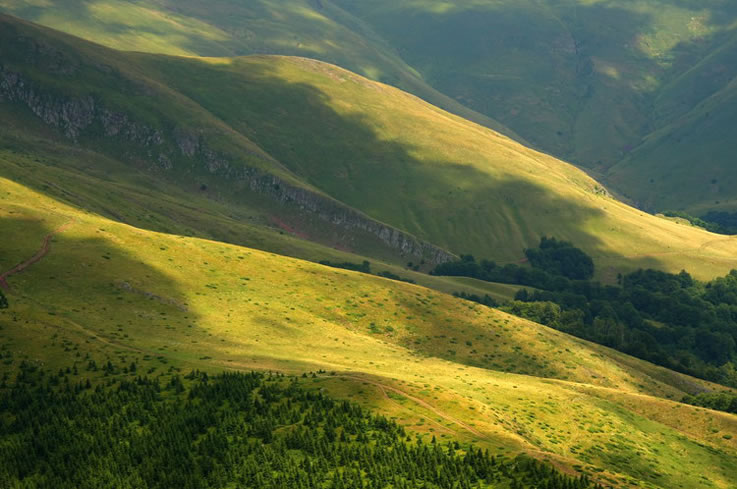
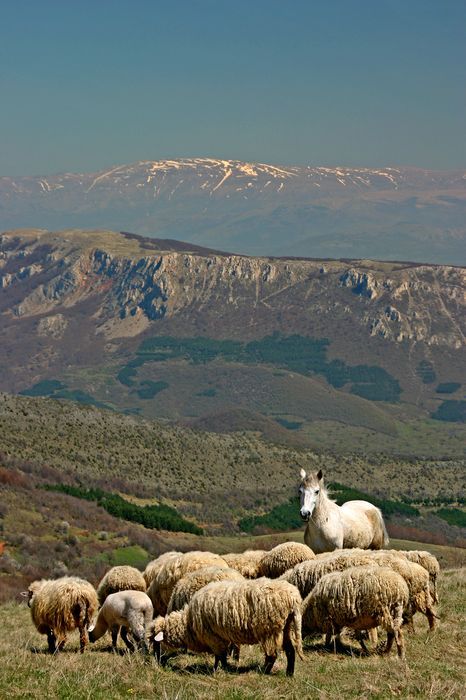
Unfortunately today, due to depopulation of the area, the lush mountain pastures are almost empty. Only few small flocks are still left like this one:
Niestety, z powodu wyludnienia terenu, bujne górskie pastwiska są dziś prawie puste. Pozostało tylko kilka małych stad, takich jak to:
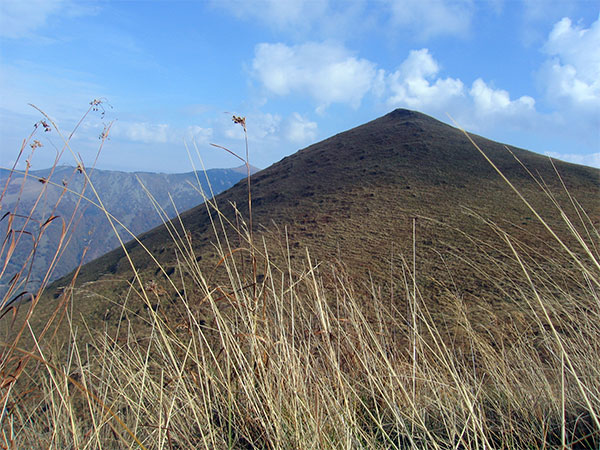
The highest peak of the Old Mountain is Midžor. It is situated on the border between Serbia and Bulgaria. At 2,169 metres (7,116 ft), it is the highest peak of the Western Balkan Mountains, as well as the highest of Serbia outside Kosovo.
Najwyższym szczytem Starej Góry jest Midžor. Położony jest na granicy Serbii i Bułgarii. Mierzący 2169 metrów (7116 stóp) jest najwyższym szczytem Gór Zachodnich Bałkanów, a także najwyższym szczytem Serbii poza Kosowem.
Under this peak we find the village Vrtovac, where every St George’s day, villagers, as well as performing an individual family lamb sacrifice, perform a collective, village lamb sacrifice in a small chapel dedicated to St George which is located in the place called Kalovat.
Pod tym szczytem znajduje się wieś Vrtovac, gdzie w dzień św. Jerzego mieszkańcy wioski, oprócz indywidualnego, rodzinnego składania ofiary z jagnięciny, składają zbiorową, wiejską ofiarę z jagnięciny w małej kapliczce poświęconej św. Jerzemu, znajdującej się w miejscowości Kalovat.
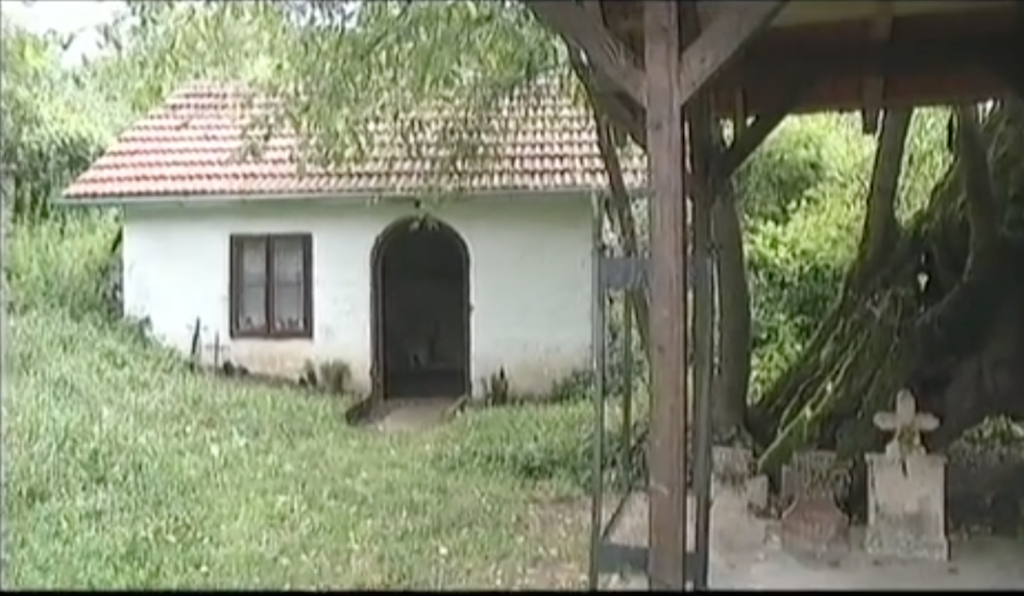
The chapel contains several old stone crosses.
W kapliczce znajduje się kilka starych kamiennych krzyży.
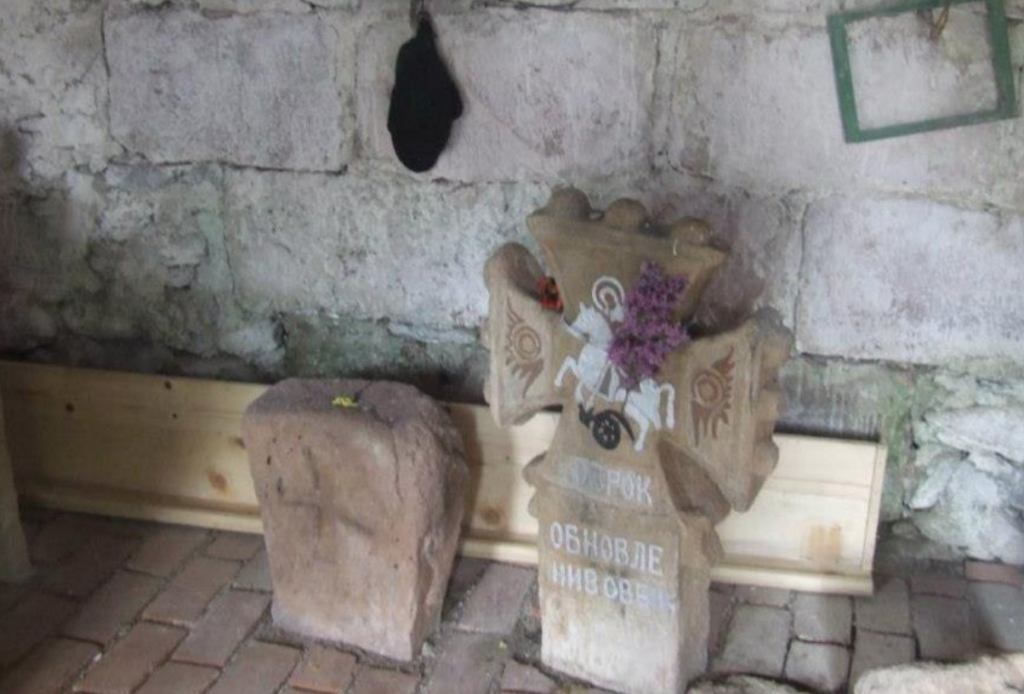
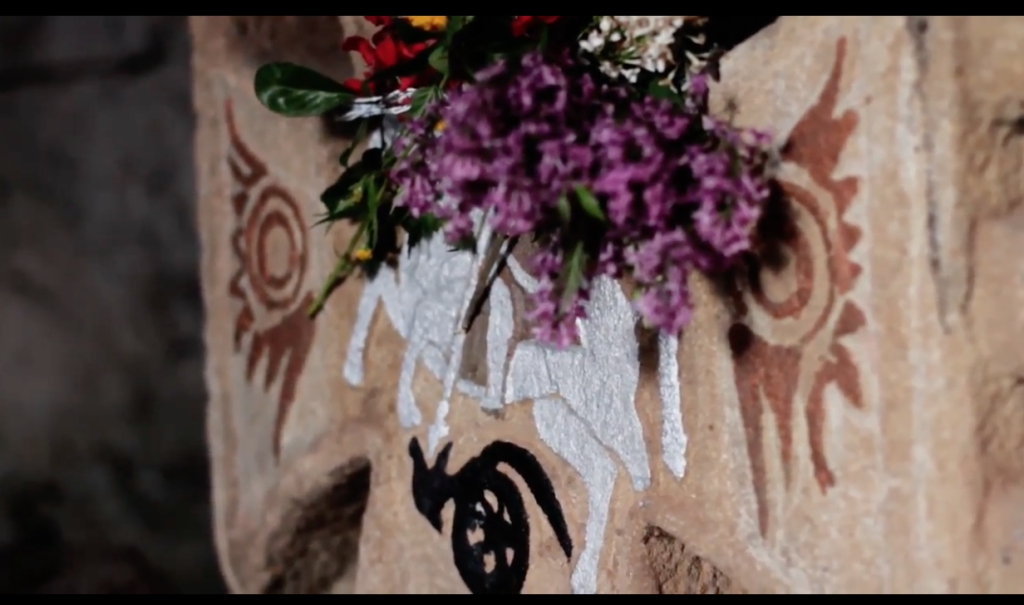
The main cross has an engraved and painted picture of St George on a white horse between two winged suns.
Na głównym krzyżu wyryto i namalowany obraz św. Jerzego na białym koniu między dwoma uskrzydlonymi słońcami.
The lamb which is slaughtered during the village sacrifice is called „molitva” which actually means „prayer”. This is very interesting as it reminds us that the original meaning of the prayer was either a sacrifice or a promise of a sacrifice in exchange for whatever people prayed for.
Baranek zabijany podczas wiejskiej ofiary nazywa się „molitva”, co w rzeczywistości oznacza „modlitwa”. Jest to bardzo interesujące, ponieważ przypomina nam, że pierwotnym znaczeniem modlitwy była albo ofiara, albo obietnica ofiary w zamian za to, o co ludzie się modlili.
The sacrificial lamb is brought to the chapel early in the morning.
Ofiarny baranek przynoszony jest do kaplicy wczesnym rankiem.
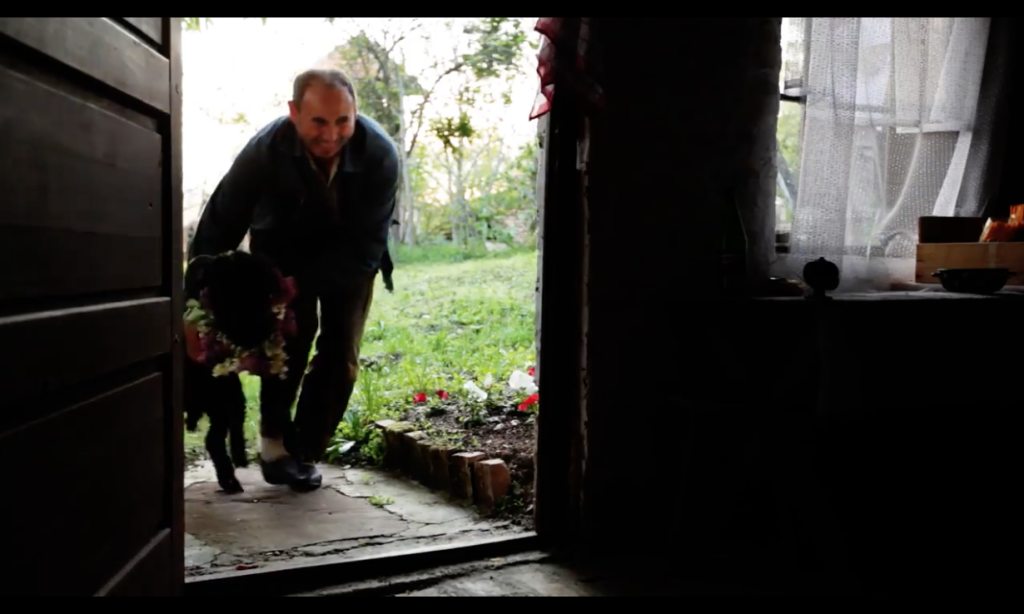
It is then laid in front of the St George’s cross where it is slaughtered.
Następnie kładzie się go przed krzyżem św. Jerzego, gdzie jest zabijany.
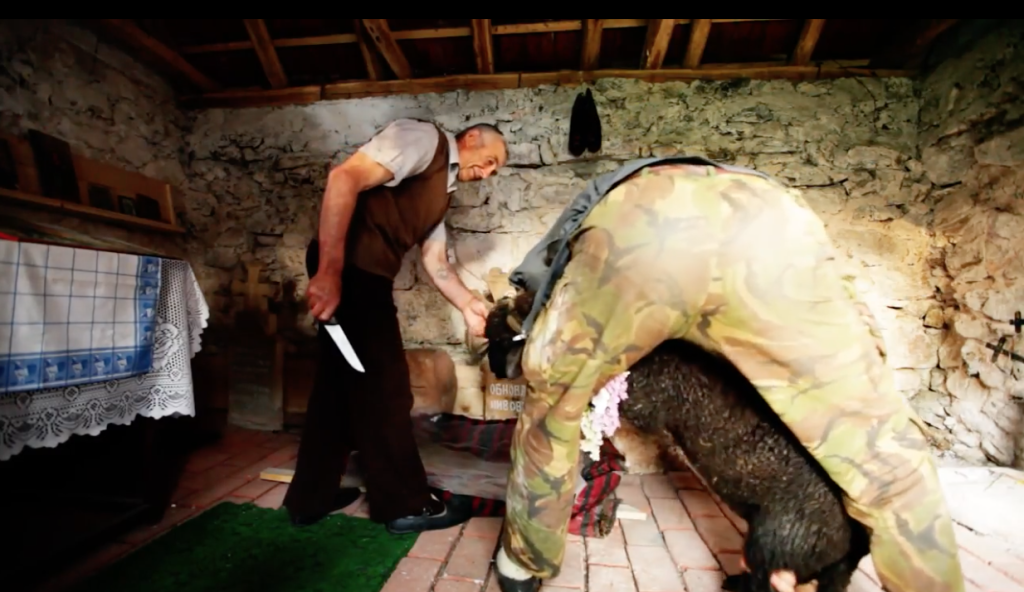
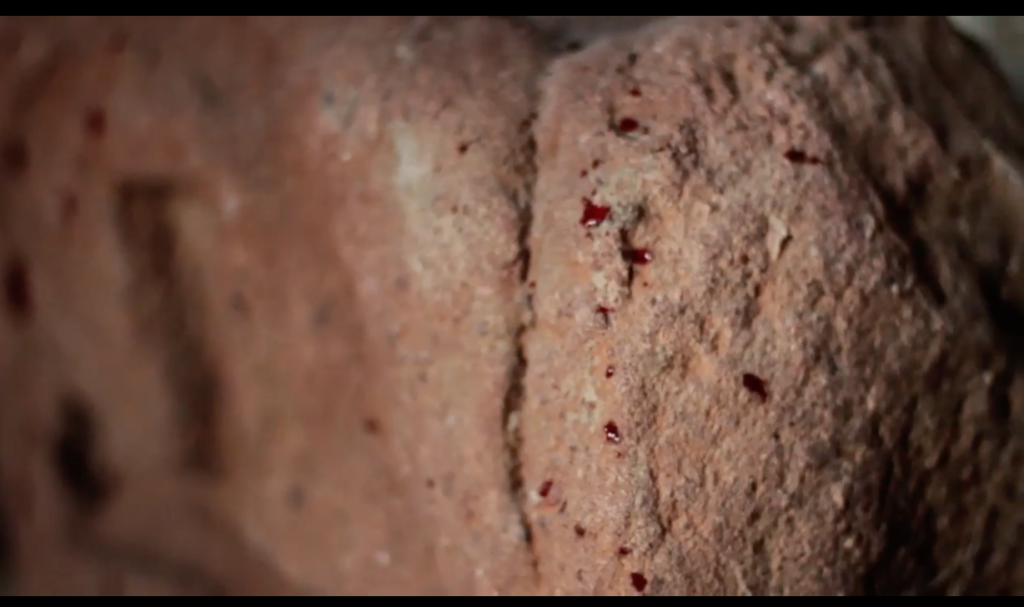
The lamb has to be slaughtered in such a way that the blood sprinkles the St George’s cross and the small red stone cross which stands next to it.
Baranek musi zostać zabity w taki sposób, aby krew spryskała krzyż św. Jerzego i mały, czerwony, kamienny krzyż, który stoi obok.
After the sacrifice is made, people circle the chapel three times. Then a mass is said by the priest and the „Slava” feast is held in front of the chapel.
Po złożeniu ofiary ludzie okrążają kaplicę trzy razy. Następnie ksiądz odprawia mszę, a przed kaplicą odbywa się obrzęd „Slava”.
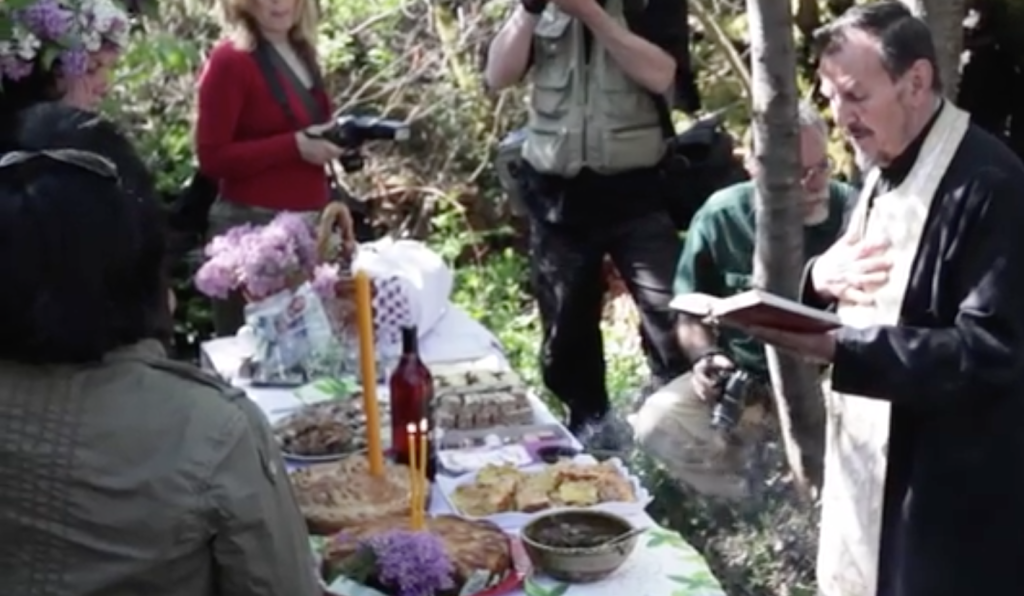
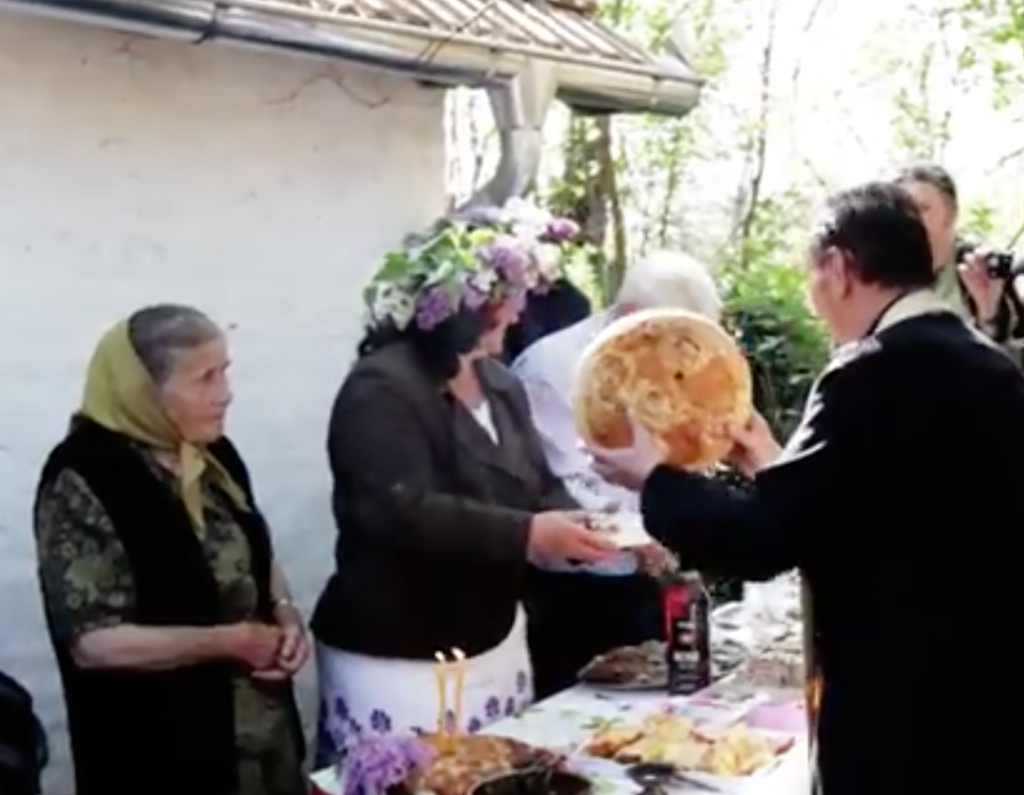
This ritual sacrifice was performed „to protect the crops, to protect the health and fertility of the farm animals, particularly sheep and to protect the village”.
Ta rytualna ofiara była składana „w celu ochrony plonów, zdrowia i płodności zwierząt gospodarskich, zwłaszcza owiec, oraz ochrony wioski”.
Now here is the question that springs to mind. Why are male lambs sacrificed to Jarilo (sorry Saint George)?
Nasuwa się pytanie: dlaczego samce… Jagnięta składano w ofierze Jaryle (przepraszam, Świętemu Jerzemu)?
One possible explanation is that shepherds sacrificed a male lamb, as a „firs fruit offering” to Jarilo in return for protecting their flocks and crops.
Możliwe jest wyjaśnienie, że pasterze składali w ofierze samca baranka, jako „ofiarę z owoców pierwszych” Jaryle w zamian za ochronę ich stad i upraw.
There is also another possible explanation.
Istnieje również inne możliwe wyjaśnienie.
In my post „Ram and Bull” I talked about the strange „coincidence” that the Aries (Ram) zodiac sign marks the end of the lambing season of the wild Eurasian sheep and that Taurus (Bull) zodiac sign marks the beginning of the calving season of the wild Eurasian cattle.
W moim poście „Baran i Byk” pisałem o dziwnym „zbiegu okoliczności”, że znak zodiaku Baran oznacza koniec sezonu jagnienia dzikich owiec euroazjatyckich, a znak zodiaku Byk oznacza początek sezonu wycieleń dzikiego bydła euroazjatyckiego.
The 6th of May, the day of Jarilo (St George’s day), which marks the end of spring and the beginning of summer falls in the middle of the Taurus (Bull) zodiac sign.
6 maja, dzień Jaryły (świętego Jerzego), który oznacza koniec wiosny i początek lata, przypada w środku znaku zodiaku Byka (Byka).
So for summer to arrive, Taurus must begin first. And for Taurus to begin, Aries has to end. The ram (male lamb) has to die.
Aby więc nadeszło lato, najpierw musi zacząć się Byk. A żeby zaczął się Byk, musi skończyć się Baran. Baran (samiec baranka) musi umrzeć.
Every year, Aries has to be „sacrificed” to Taurus or the summer will not begin…
Każdego roku, Baran musi zostać „poświęcony” Bykowi, inaczej lato się nie zacznie…
Interesting right?
Interesujące prawda?

Is the ritual sacrifice of lambs to Jarilo a ritual representation of this natural process?
Czy rytualne poświęcenie jagniąt dla Jaryły jest rytualnym przedstawieniem tego przyrodzonego / przyrodniczego procesu?
źródło: https://oldeuropeanculture.blogspot.com/2018/07/aries-must-die.html
1CB – Nie komentuję przebiegu serbskiego obrzędu, bo opisał go doskonale Goran Pavlovic i na pewno zrobił to najgłębiej jak to było możliwe i najpełniej. Mnie nie udałoby się dotrzeć do tych wszystkich szczegółów jakie on tutaj przedstawił.
Jednak trzeba się odnieść do całego zarysowanego tu obrazu z poziomu WiaroWiedy i Wijozowii Przyrody/Przyrodzonej żeby rozwikłać parę zagadek. Pierwszą i najważniejszą z nich jest moment w roku kalendarzowym w jakim się te obrzędy odbywają. Drugą jest, które ze zwierząt w Przyrodzie było faktycznie źrodłem, czyli przedmiotem obserwacji w związku z przedstawionymi tutaj obrzędami. Trzecią, czy rzeczywiście Serbowie przechowali w tym jednym godowym bloku obraz dawnego jednego święta, czy nie dwóch połączonych „przypadkowo”, albo… jeszcze większej ich liczby? Czwarta zagadka to: jeśli łączy się tutaj więcej obrzędów niż jeden, jakim momentom kalendarzowym i świętom godowym powinny one odpowiadać.
Na koniec powinniśmy móc sobie odpowiedzieć gdzie lokować starożytne źródła przedstawionych obrzędów / świąt (jeśli jest ich tutaj więcej niż jedno w jednym), czyli skąd one pochodzą oraz czy kalendarz nazywany współcześnie celtyckim (oparty o Górowania CZTERECH Pór Roku) jest w ogóle odpowiednim jako podstawa, albo jedynym (bez żadnych uzupełnień), do zastosowania w Porządku Godowym Świąt u Słowian.
Zacznijmy od pierwszego i jednocześnie drugiego pytania, bo one oba splatają się ze sobą nierozerwalnie, a tak się składa, że aby przedstawić w Księdze Tanów sensowne i solidne Godowe Koło Lędne Słowian, czyli kalendarz obchodów świąt, musiałem te problemy rozwiązać na samym początku pracy i to w sposób niezawodny, bo gdybym tego nie zrobił cała budowla zwana Ku-Lędarzem Słowian posypałaby się jak domek z kart.
Zacznijmy od Zowijaku (Zodiaku). Od kiedy do kiedy trwa znak Barana i znak Byka?
Baran: 21 marca – 19 kwietnia, a Byk: 20 kwietnia do 20 maja. Tym samym mamy dokładnie odpowiedź na pytanie kiedy Zabić Barana i odbyć ucztę obrzędową posilając się baranim/jagnięcym mięsem ofiarnym – żertwą. Na pewno nie 6 maja, ani 30 kwietnia, tylko dokładnie 20-26 kwietnia, czyli w Gody Zielonych Świątków (Zielone Świątki).
Ustalenie tego faktu pozwala nam stwierdzić, że w tym jednym święcie serbskim połączono najprawdopodobniej dwa dawne święta, a co najmniej dwa zupełnie odrębne początkowo obrzędy.
Kolejna sprawa: Kiedy p-OWIJane są pierwsze OWITY, czyli OWIJeczki z jesiennych godów OWIEC (o-WIJ-ec, z ich jesiennej OWU-li (owulacji – jajeczkowania i godowania)? Zatem też, kiedy pojawia się pierwsze OWO / OWIJte Mleko OWIJec?
Rzecz jest doskonale znana wszystkim bacom w Polsce, czyli w Północnych Karpatach, bo to była na przednówku (w Przednowiu) dosłownie „żywotna” sprawa, kwestia nieraz przetrwania rodziny. Pierwsze owce rodzą się na przełomie stycznia i lutego, czyli dokładnie według celtyckiego kalendarza w Omelc (Owi Mlecz / Owczomlecz), czyli inaczej w Imbolc, tj. 31 stycznia – 5 lutego. Sprawę lingwistyki tego święta, które w oryginale nie nazywa się Imbolc tylko Omelc / Omelcz / Omlecz przedstawiam dokładnie i omawiam w Księdze Tanów, tom 2. U nas te obchody godowe nazywamy Tanem Sinym, bo jest to Górowanie Zimy, a jednocześnie Poczęcie – ale nie Narodzenie – Wiosny. A więc podbieranie owcom mleka, ich dojenie, rozpoczyna się właśnie wtedy, kiedy stają się one mleczne. Wtedy też wyrabia się pierwsze sery.
To nie ma nic wspólnego z Redykiem i wypędem owiec na górskie hale. Jest to wielkie święto przełamania Zimy i zimowego głodu, postu – Przednowia, w którym głód bywał czasami tak wielki, że powstał stały obrządek Kuligu (Ku-lęgu) i Kolędy (Ku-lędy), czyli „najeżdżania” (nawiedzania) sąsiednich gospodarstw w poszukiwaniu pożywienia i zwyczaj pożywiania się wszystkich razem, tym co kto miał i co wnosił do wspólnego godowania. Działo się to przed miesiącem lutym w Tanie Zapustu (20-26 stycznia) i Tanie Sinym (31 stycznia – 5 luty). Po tym czasie w miesiącu lutym pod jego koniec (20 – 26) odbywały się już Gody Rozpustu, Wilcze Gody ( w starożytnym Rzymie Luperkaria), które chrześcijaństwo przekształciło w „Karnawał” i zrobiło z niego święto ruchome powiązane z Wielkanocą (Jarymi Godami Słowian 20-26 marca). Do czasu ustanowienia kulędarza słonecznego Gody Rozpustu (Wilcze) miały miejsce dokładnie w księżycowym miesiącu wyrównawczym Przedmarczyku/Świcieniu – Wilczym Miesiącu – Miesiącu Tynu Mokoszów! (W tym „Bracie Miesiącu”, z którego zaginięciem bezpowrotnym i odejściem Mokosza w Księdze Tura nie może się pogodzić i który wciąż opłakuje).
A w tym przełamaniu, w krajach rolniczych, w kulturach neolitycznych uprawno-hodowlanych istotny udział mają Owce po-Owijające młode i odzyskujące pierwe (pierwotne) Owo – Owit (owulę-jajo, czyli odzyskujące po po-owiciu, ponowną możliwość powrotu do płodności z wiosną, około 20-26 marca) oraz darujące / dające ludziom Owo – Owiczne Mleko, pierwe, jare p-owijne mleko.
Po-jawinie się na świecie pierwszych p-owitych owieczek (jagniąt) ob-jawia i ob-wij-eszcza równocześnie Poczęcie Wiosny, koniec okresu postnego, niedostatku pożywienia.
Zatem ustalenie tego faktu pozwala nam na oddzielenie nie tylko obydwu obrzędów od siebie, ale w ogóle całych godów. Mamy tutaj pokazane dwa oddzielne święta złączone w jedno. Każdy z tych obrzędów należał do innego święta godowego. Jak to się stało, że u Serbów obchodzone były w XIX i XX wieku razem?
Moim zdaniem grają tutaj rolę dwie przyczyny:
a) zamieszanie w porządku kalendarzowym obchodów godowych u Serbów wynikające z ich przesunięcia się jako ludu z Północy na Południe. Bo to Północ jest źrodłem dla Kalendarza Słowian, jest źrodłem obrzędowości związanej z obserwacją zachowań owiec i wreszcie jest źrodłem Zowijaku (Zodiaku) oraz pojęcia Świętego Kręgu i Świętego Krzyża Czasu, którego wyrazem jest znak Świjastyki/Swastyki (Równoramiennego Krzyża Godów / Czterech Pór Roku, w obrotowym ruchu). Źródłem geograficznym tego obrzędu jest pre-słowiano-aryjski Ośrodek Nadwiślański, konkretnie zaś kultura ceramiki sznurowej lub jeszcze wcześniejsza kultura pucharów lejkowatych w Górach Świętokrzyskich (Górach Świętego Krzyża, co nazewniczo utrwaliło chrześcijaństwo przejmując pogański kult Świętej Góry Pałki). Dlaczego tam? Dlatego, że z pewnością nie są nim Góry Ural-Haral ani Południowa Syberia (nad jeziorem Aral i Bajkał, Stara Koliba Praindoeuropejczyków / Pra-Słowiano-Ariów), gdzie panują srogie warunki zimowe, a śnieg w okolicy i lód na jeziorach zalegają często do końca kwietnia, po czym następuje od razu syberyjskie „lato”.
Czyli w tym zamęcie związanym ze zmianą miejsca pobytu przez Serbów nastąpiło też ich oderwanie się od głębokiego rozumienia pierwotnej tradycji, od Źródła, po przejściu z Mazowsza, Gór Świętokrzyskich i Łużyc na Bałkany. Ta zmiana klimatu na cieplejszy spowodowała także, że cztery pory roku stały się dla nich mniej wyraźne, albo wręcz zlały się w dwa duże okresy: Okres Jasności (wiosenno-letni) i Okres Ciemności (Jesienno-zimowy). Podobnie jest nad Bajkałem i Aralem oraz w Górach Ural.
b) Mogło się to wydarzyć także w toku chrystianizacji w związku z przesuwaniem przez kościół świąt pogańskich i dostosowywaniem ich terminów obchodów do kalendarza chrześcijańskich świętych. Taka możliwość także istnieje. Mniej ważny moment w rolnym cyklu w nowym środowisku geograficznym „przylepiono” do ważniejszego. Sprzyjała temu sytuacja iż na Bałkanach pora zimowa przez swoją łagodność nie wyczerpuje zapasów żywności, nie grozi głód i post na Przednowiu. W tych warunkach moment powicia owiec i pierwszego udoju mleka owczego stał się mniej istotny niż wypęd owiec na wypas w góry i ofiara z Barana dla Byka oraz Uczta Barania.
Dalej, jeśli idzie o Redyk Wiosenny, czyli wypęd owiec na hale to zaczyna się on dokładnie 20 – 26 kwietnia, a więc już w znaku Byka. A dlaczego tak? Bo tak naprawdę było to święto wypuszczenia z obór po zimie wszystkiego bydła rogatego, nie tylko baranów ale i krów, czyli święto Byka i Barana, jak też Konia i Kozy (które nie były zwierzętami zowijakalnymi). Pamiętajmy, że dawniej pasano na wspólnych łąkach całą trzodę hodowlaną (godowlaną): bydło, kozy, świnie i konie gdzieś blisko sioła, a tylko owce wysoko w górach. Nie było to więc tak jak obecnie, jedynie góralskie święto, lecz powszechne święto rolnicze i hodowlane także na nizinach. Świadczą o tym tradycje Nurskich Trąbit – podlaskich, poleskich i mazowieckich, obchodzonych do dzisiaj w terminie Wypędu równie uroczyście co Trąbity Harskie – góralskie (owcze). Rzecz jasna faktyczny czas wypędu był regulowany ściśle rzeczywistymi porami roku w danym rejonie, ale czas świętowania był stałym ku-lędarzowym okresem godowania wyznaczanym Słońcem i Gwiazdami, a więc kalendarzem gwiezdnym, a nie faktyczną pogodą.
Zupełnie co innego, gdyby zwierzęciem obserwowanym przez wiedunki i wiedunów ludu, który wytworzył te obchody świąteczne była nie owca, ale kozica górska: czy to północa (alpejsko-tatrzańska), czy południowa (bałkańsko-pirenejska), czy też kreteńska (mała kozica – kri-kri, Capra aegagrus cretica). Kozice bowiem rozpoczynają laktację po urodzeniu małych na przełomie kwietnia i maja.
Problem w tym, że to nie kozice stanowią znak zodiaku i nie kozice są głownymi górskimi hodowlanymi zwierzętami w Europie, lecz właśnie owce i barany. Marna jest więc szansa na to żeby rolniczo-pasterski lud Serbów opierał swój rolniczy kalendarz i godowanie na obserwacji kozic górskich a nie owiec. Dodatkowo za owcą przemawia fakt że to jagnięta owiec, a nie kóz – młoda owca i baranek są podmiotem opisywanych tutaj obchodów. Owcze mleko i owcze sery a nie kozie są też spożywane w tym święcie.
Trzecia sprawa: na pewno także nie ma powodu zabijać barana na ofiarę w Białym Tanie w maju, bo to już jest czas Byka. Mamy tutaj więc trzy obrzędy pochodzące albo z dwóch świąt godowych albo i z trzech, a wszystkie utrwalone w tradycji na Bałkanach i opisane według tejże tradycji, ale w XX wieku, czyli w czasie bardzo odległym od czasu źródła.
Podsumowując:
Redyk może odbywać się lokalnie między końcem kwietnia a początkiem maja i zostać tym samym przypisany do Białego Tanu (Beltaine) w okresie 30 kwietnia – 6 maja, lub być związany z Zielonymi Świątkami (20-26 kwietnia) i odbywać się w tym czasie, tak jak i dzisiaj w Polsce.
Ofiara z Barana dla Byka jest na pewno związana z Zowijakiem i Kalendarzem Rocznym Gwiazdowym i musi odbywać się między 20 a 26 kwietnia, bo inaczej nie ma żadnego logicznego uzasadnienia, a więc ewidentnie przynależy do Godów Zielonych Świątków.
Mlekowicie na 99,9% związane jest w powiciem pierwszych owiec, a nie kozic górskich ani kóz hodowlanych, a więc może być związane tylko i wyłącznie z Sinym Tanem odbywanym w okresie 31 stycznia do 5 lutego. Potwierdzają to post-celtyckie obchody święta Omelc/Imbolc w Irlandii,czy Walii odbywane na przełomie stycznia i lutego.
Teoretycznie, ale tylko raczej teoretycznie, lokalnie mogłoby się to dziać ewentualnie trochę później, a więc być związane z miesiącem przejściowym, wyrównawczym Przedmarczykiem, Kusym nazywanym też Świcieniem i po przejściu z kalendarza księżycowego na słoneczny mogłyby te obrzędy zostać dołączone do marcowych Jarych Godów (20 -26 marca). Jednak logicznie ten termin nie wchodzi w grę, bo jest zbyt odległy od pojawienia się mleka owczego na przełomie stycznia i lutego.
I tak dochodzimy do kwestii na czym oparto kalendarz Słowiano-Ariów, czy też Pre-Słowiano-Ariów w ich Nowej Kolibie Karpackiej (Harskiej) i Mazowiecko-Poleskiej (Nurskiej). Bez wątpienia oparto go na Swastyce i obserwacji Gwiazd oraz powiązaniu tego ruchu gwiezdnego z czasem godowania zwierząt, w tym wypadku na pewno zwierząt hodowlanych, gospodarskich – owiec.
Obserwacja Górowania Pór Roku była istotnym uzupełnieniem tego kalendarza i być może jest jakimś wkładem Pra-Celtów w kulturę i tradycję Pra-Słowian, zwłaszcza na południu Europy, bo na północ w tak odległym okresie (musiałoby się to dziać około 3500 lat p.n.e.) ich wpływy kulturowe nie sięgały, albo sięgały śladowo. Widzimy jakieś ich wpływy materialne tak naprawdę dopiero w sprowadzanych na nasze ziemie północne przedmiotach, będących zabytkami archeologicznymi kultury lateńskiej, czyli występującymi między V wiekiem p.n.e. a II wiekiem n.e., kiedy kalendarz rolny, obrzędowość z nim związana i całe nazewnictwo rolniczo-hodowlane były już u Pra-ArioBałtoSłowian (Skołoto-Isto-Słowian = SIS) od dawna ustalone.