
© by Goran Pavlovic; tłumaczenie Czesław Białczyński
© komentarz Czesław Białczyński
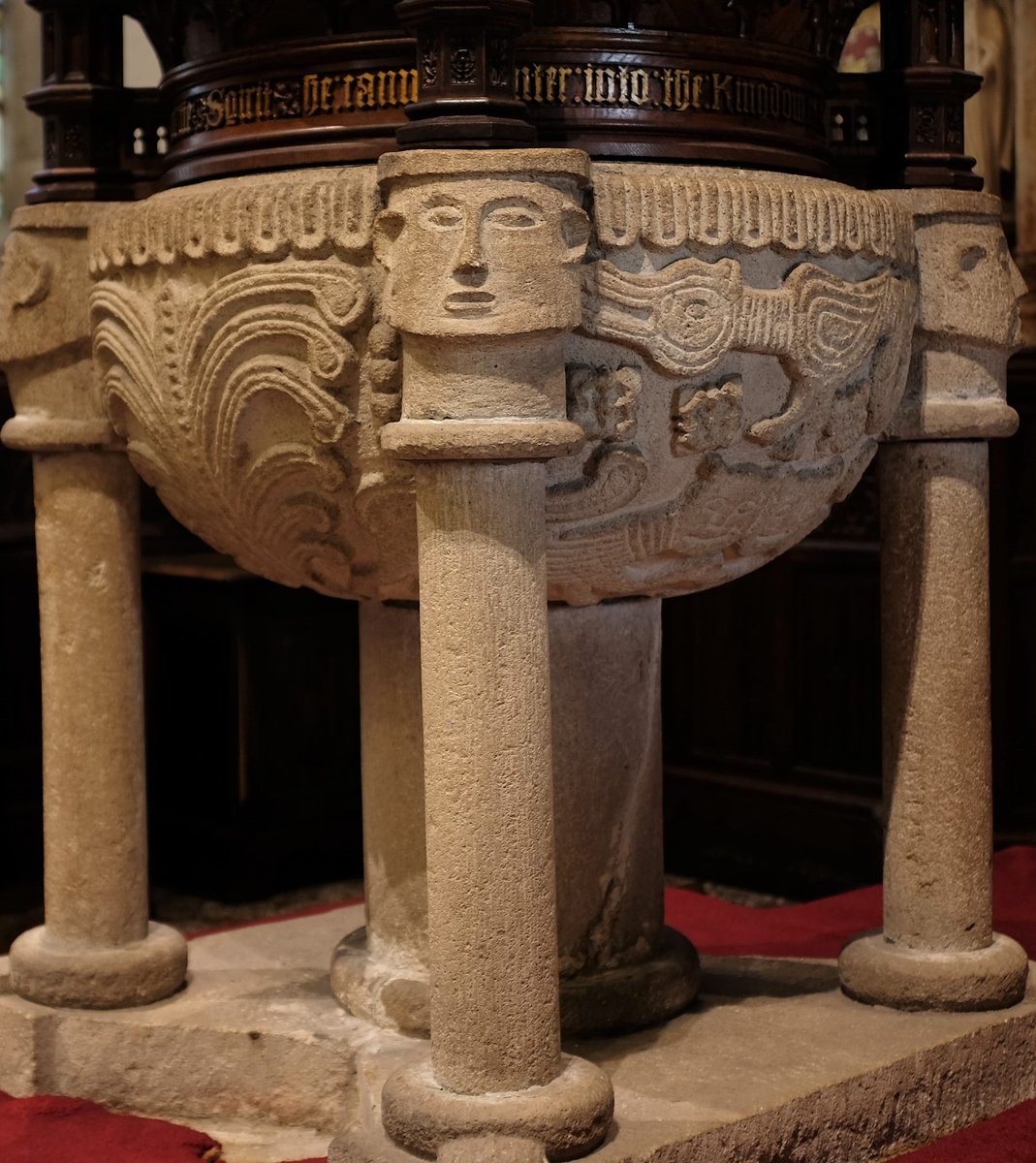
This is Holy Trinity Church, St Austell is a parish church in the Church of England in St Austell, Cornwall.
To kościół Świętej Trójcy. Kościół św. Austella jest kościołem parafialnym Kościoła Anglikańskiego w St. Austell w Kornwalii.
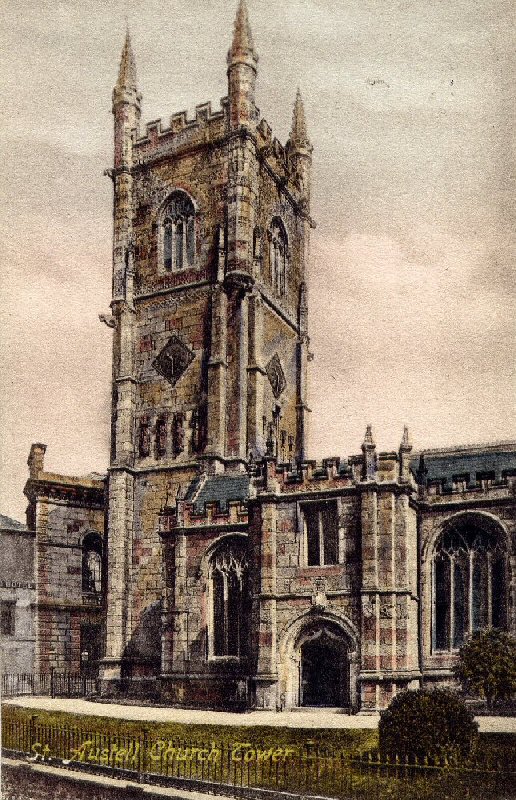
The church was originally dedicated to St Austol, a Breton saint associated with St Meven, but is now dedicated to the Holy Trinity. By 1150 it had been appropriated to the Priory of Tywardreath by the Cardinhams: this continued until 1535. There was originally a Norman church here, of which some remains may be seen. The present church is of the 15th century. The church was restored in 1872 by George Edmund Street.
Kościół pierwotnie był poświęcony św. Austellowi, bretońskiemu świętemu związanemu ze św. Mevenem, ale obecnie jest poświęcony Świętej Trójcy. W roku 1150 został przekazany klasztorowi Tywardreath przez Cardinhamów: tak było do 1535 roku. Pierwotnie znajdował się tu kościół normański, którego pozostałości można zobaczyć. Obecny kościół pochodzi z XV wieku. Kościół został odrestaurowany w 1872 roku przez George’a Edmunda Streeta.
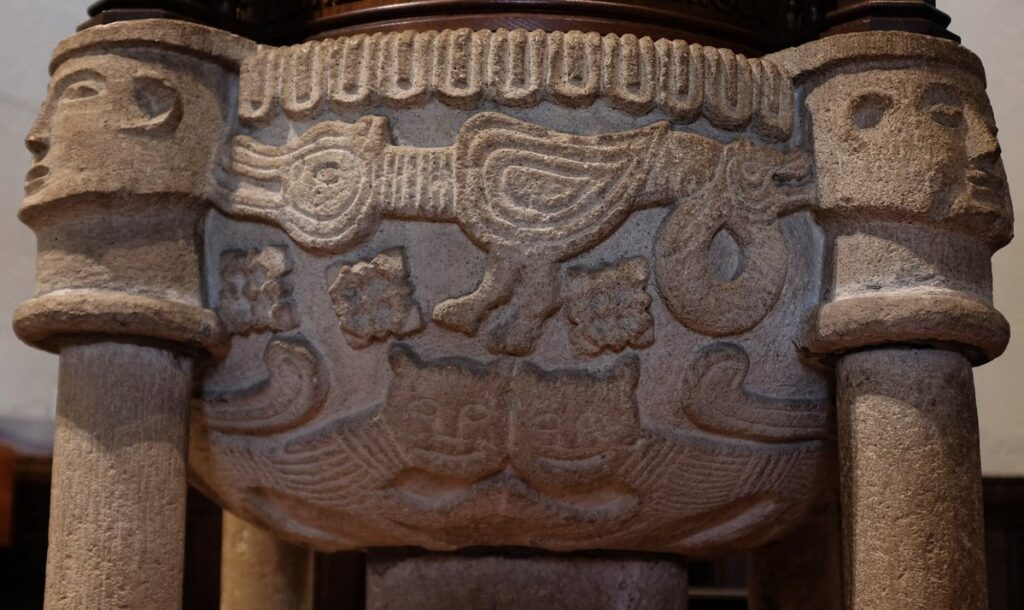
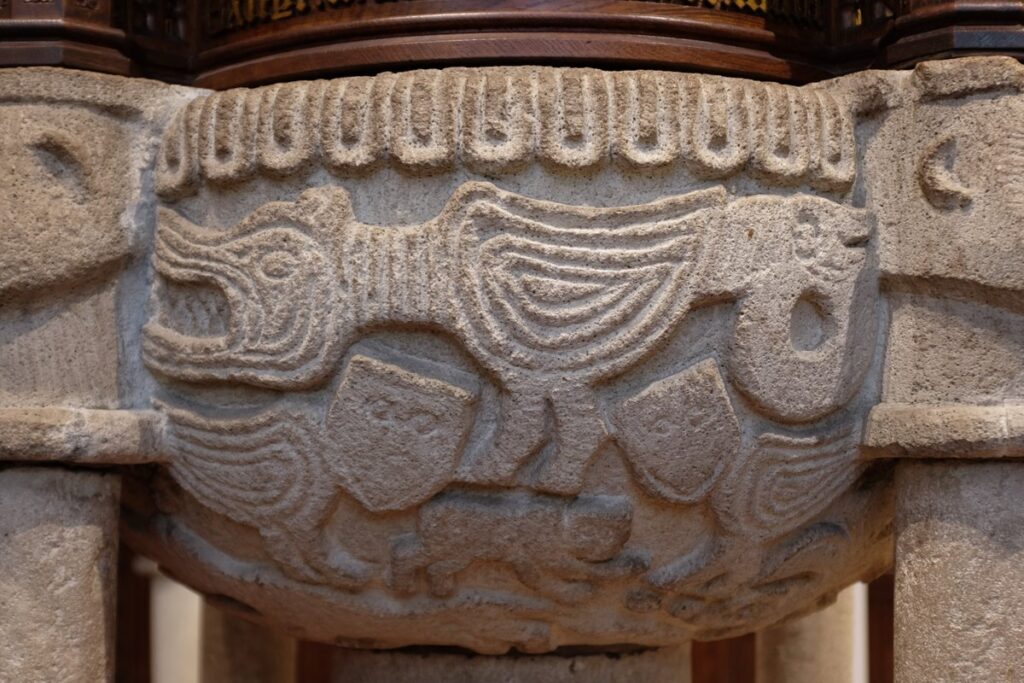
One of the the remains from the original Norman church is this baptismal font. It is richly decorated with four faces one at each corner, a tree of life, dragons, lions and birds.
Jedną z pozostałości pierwotnego kościoła normańskiego jest ta chrzcielnica. Jest bogato zdobiona czterema twarzami, po jednej na każdym rogu, drzewem życia, smokami, lwami i ptakami.
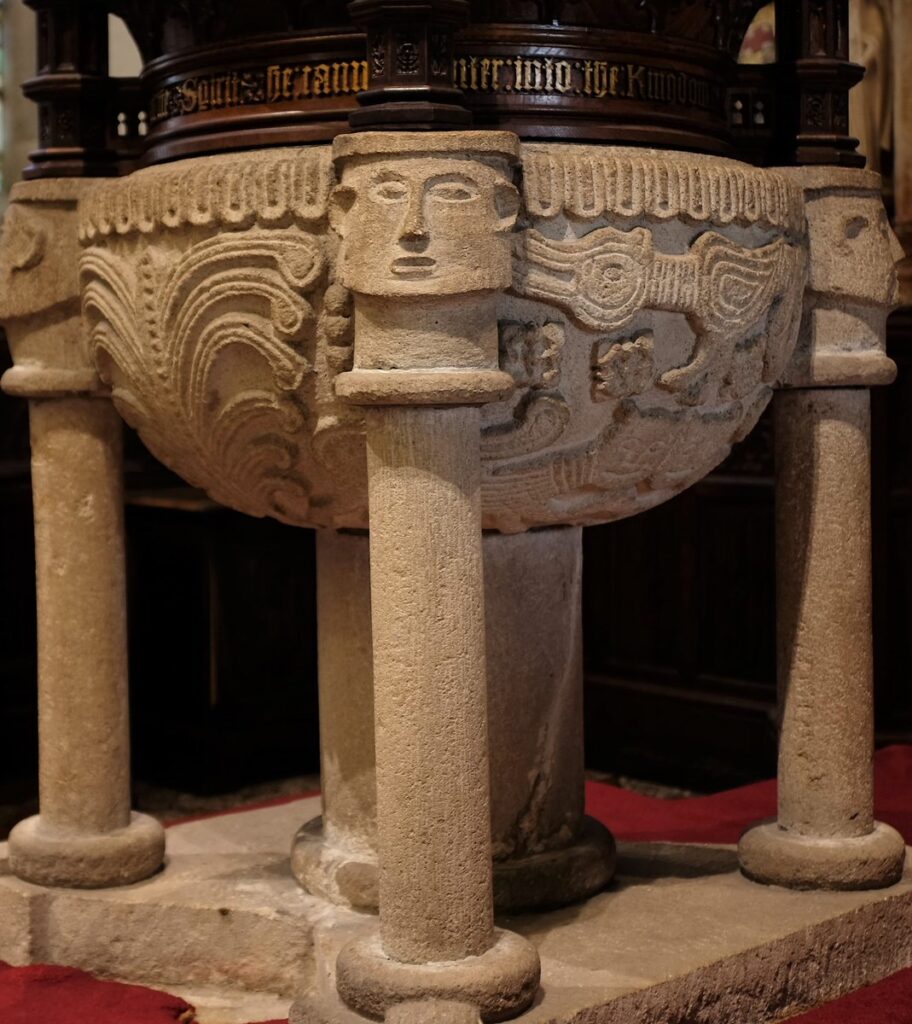
I would like to thank Dr Helen Wilson for drawing my attention to this exceptionally beautiful and exceptionally strange object.
Chciałbym podziękować dr Helen Wilson za zwrócenie mojej uwagi na ten wyjątkowo piękny i wyjątkowo dziwny obiekt.
The reason why this font is so strange is that none of the symbols carved into it makes no sense from the Christian point of view.
Powodem, dla którego ta chrzcielnica jest tak dziwna, jest to, że żaden z wyrytych do jej symboli nie ma sensu z chrześcijańskiego punktu widzenia.
This is because these are not Christian symbols 🙂
To dlatego, że nie są to symbole chrześcijańskie 🙂
What is very interesting is that ALL the symbols have a very specific meaning in Slavic mythology.
Co bardzo interesujące, WSZYSTKIE symbole mają bardzo konkretne znaczenie w mitologii słowiańskiej.
Dragon
Drakon (Smok) / Żmij (Żnuj)
In my post „Three suns” I talked about the symbolic link between Snakes and the light and heat of the sun. This link was clearly preserved in Slavic mythology. Snakes come out of hibernation just before the the Spring Equinox. Snakes go back to hibernation just after the Autumn Equinox. So snakes are out during the period between Spring and Autumn Equinoxes, during the brightest and hottest part of the year. Slavs believed that once out, snakes constantly „suck the heat out of the sun” and that this is why sun eventually looses it’s light and heat and days get shorter and shorter and colder and colder.
W moim poście „Trzy słońca” pisałem o symbolicznym związku między Wężami a światłem i ciepłem słońca. Związek ten jest wyraźnie zachowany w mitologii słowiańskiej. Węże wychodzą z hibernacji tuż przed równonocą wiosenną. Węże wracają do hibernacji tuż po równonocy jesiennej. Zatem węże wychodzą na zewnątrz w okresie między równonocą wiosenną a jesienną, w najjaśniejszej i najgorętszej porze roku. Słowianie wierzyli, że po wyjściu na zewnątrz węże nieustannie „wysysają ciepło ze słońca” i dlatego słońce ostatecznie traci swoje światło i ciepło, a dni stają się coraz krótsze i coraz zimniejsze.
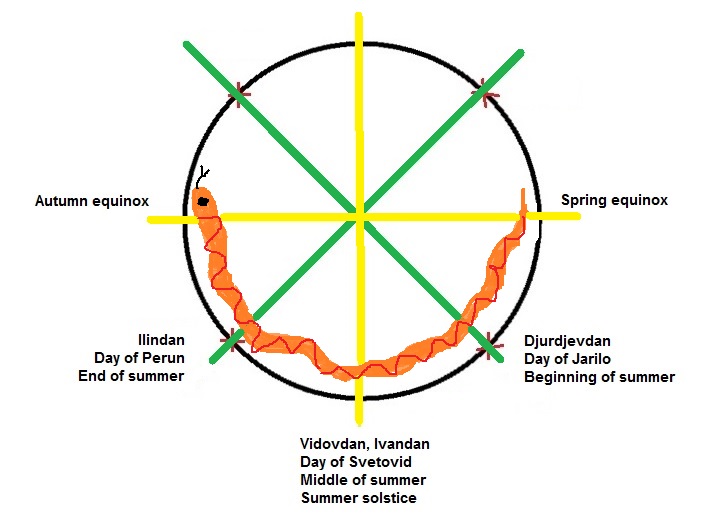
In Slavic languages the word for dragon „zmaj” is the masculine form of the word for snake „zmija”. In Slavic mythology dragon is believed to be an „old male snake”…
W językach słowiańskich słowo „smok” [CB: żmaj / żnuj / żmij] to męska forma słowa „żmija” oznaczającego jadowitego węża. W mitologii słowiańskiej żmij uważany jest za „starego samca węża”…
The sun’s heat is „young” week and beneficial at the end of spring, just before the summer starts. The sun’s heat is „old” strong and destructive at the end of summer, just before the autumn starts. This is why Dragon, a heavenly being that breaths fire, the old male snake, represents the burning heat of the Late Summer, Early Autumn, the „old sun”, the sun which is threatening to turn everything into cinder.
Słoneczny żar jest „młody” i korzystny pod koniec wiosny, tuż przed rozpoczęciem lata. Słoneczny żar jest „stary”, silny i niszczycielski pod koniec lata, tuż przed rozpoczęciem jesieni. Dlatego Smok, niebiańska istota ziejąca ogniem, stary samiec węża, reprezentuje palące ciepło późnego lata, wczesnej jesieni, „stare słońce”, słońce, które grozi obróceniem wszystkiego w popiół.
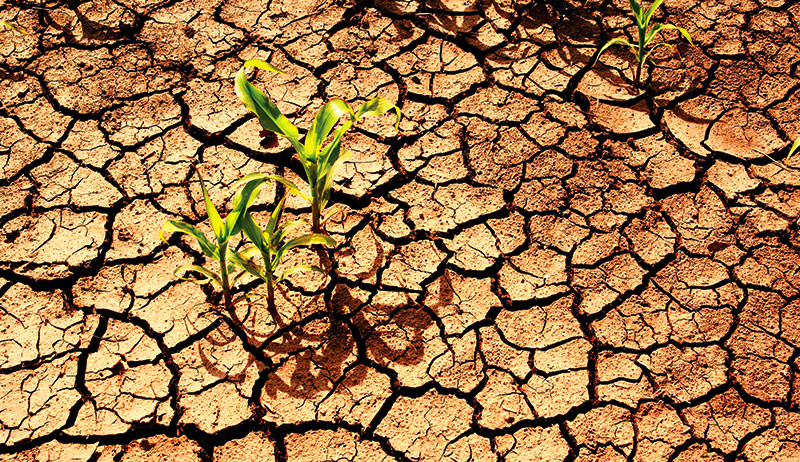
In Slavic Pre-Christian religion this dragon was Veles, the great horned snake, who „Stole heavenly cows from Perun”. Basically he is the late summer heat which dries the land and the sky and causes draughts. You can read more about this in my post „Lion killing Snake” and my post „Two crosses„.
W słowiańskiej religii przedchrześcijańskiej smokiem tym był Weles, wielki rogaty wąż, który „ukradł niebiańskie krowy Perunowi”. Zasadniczo jest on późnym letnim upałem, który wysusza ziemię i niebo oraz powoduje susze. Więcej na ten temat można przeczytać w moim poście „Lew zabijający węża” i poście „Dwa krzyże”.
Lions
Lwy
Veles (the summer heat) gets killed by Perun (autumn thunderstorms) at the moment when he is the most powerful: on the 2nd of August (the end of summer, beginning of autumn according to Serbian calendar). The day is celebrated in Serbia as Perun day or St Elijah the thunderer day. This happens in the middle of Leo zodiac sign. hence two lions facing each other to symbolise „the middle of Leo”. You can read more about this in my post „Thundering sun god„.
Weles (letni upał) ginie z powodu Peruna (jesiennej burzy) w momencie, gdy jest najpotężniejszy: 2 sierpnia (koniec lata, początek jesieni według kalendarza serbskiego). Dzień ten obchodzony jest w Serbii jako Dzień Peruna lub Dzień Świętego Eliasza Gromowładnego. Wypada on w środku znaku zodiaku Lwa. Stąd dwa lwy zwrócone ku sobie, symbolizujące „środek Lwa”. Więcej na ten temat można przeczytać w moim poście „Grzmiący Bóg Słońca”.
Birds
Ptaki
The two birds, although they might look like owls, are just birds, not owls in particular.
Te dwa ptaki, choć mogą wyglądać jak sowy, to po prostu ptaki, a nie sowy w szczególności.
Every year, during spring, which is in Serbian called „proleće”, which can mean both „before summer” and „flying by, migrating”, migratory birds arrive back home, signalling the end of the cold part of the year and the beginning of the warm part of the year.
Każdego roku wiosną, która po serbsku nazywa się „proleće”, co może oznaczać zarówno „przed latem”, jak i „przelatując, migrując”, ptaki wędrowne powracają do domu, sygnalizując koniec zimnej pory roku i początek ciepłej.
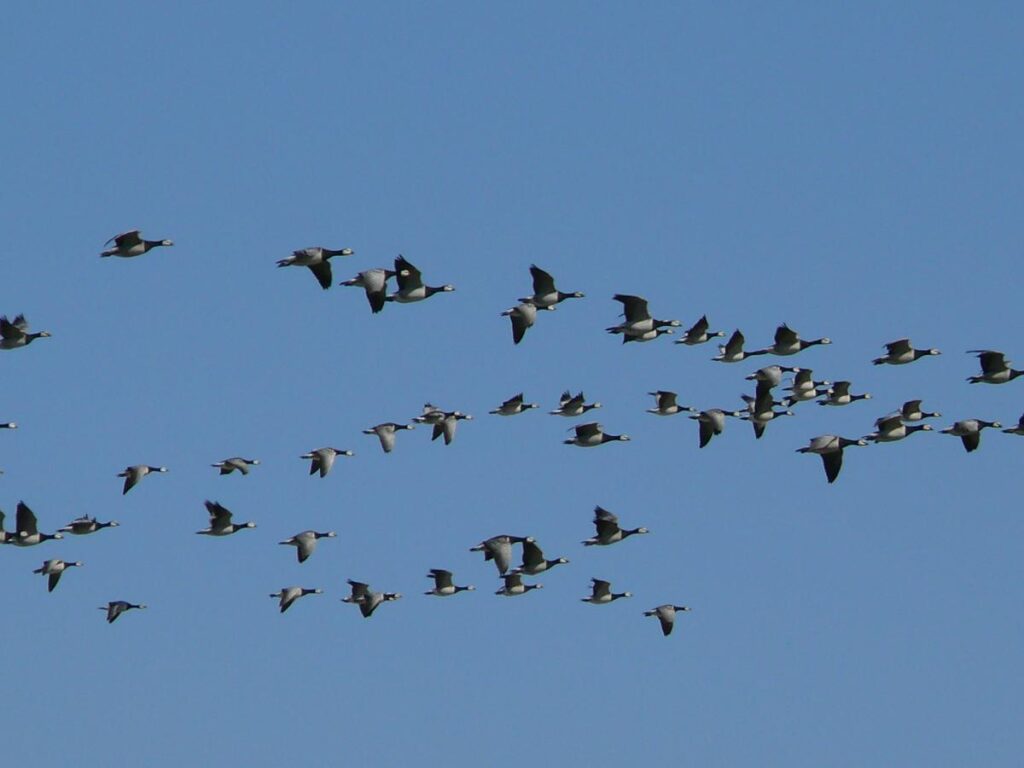
Equally the end of the warm period of the year, which normally coincides with the end of October, the end of the climatic end of autumn, is signaled by the flight of the migratory birds, this time in the opposite direction, flying away to their wintering sites.
Podobnie koniec ciepłego okresu roku, który zazwyczaj przypada na koniec października, koniec klimatycznego końca jesieni, sygnalizowany jest lotem ptaków wędrownych, tym razem w przeciwnym kierunku, odlatujących na zimowiska.
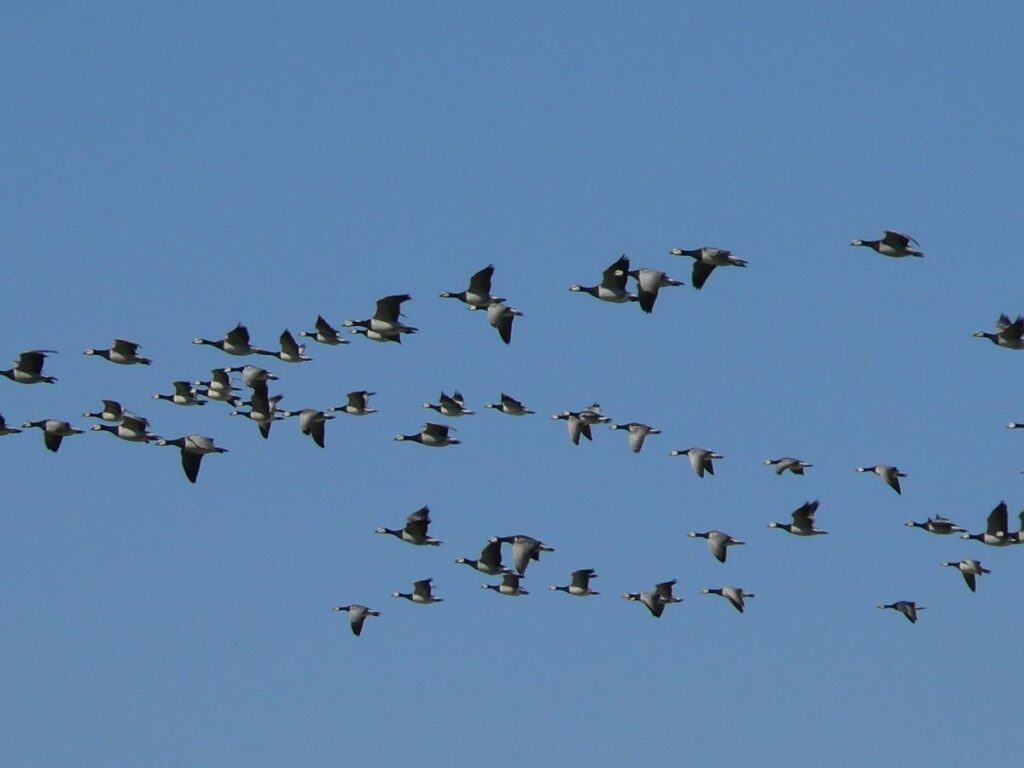
In the old Serbian calendar, year only had two parts: the warm, white part, summer (6th of May to 5th of November), and cold, dark part, winter (6th of November, 5th of May).
W starym serbskim kalendarzu rok składał się tylko z dwóch części: ciepłej, białej, letniej (od 6 maja do 5 listopada) oraz zimnej, ciemnej, zimowej (od 6 listopada do 5 maja).
So the period between these two „let” (flights) of migratory birds, between their arrival and their departure, is „leto” (summer). This beginning of the new „summer” is the beginning of the new period of vegetative growth and abundance, the „important” part of the year. I believe that this is why Serbian word for „summer” and „year” is the same: „leto”…
Zatem okres między tymi dwoma „letami” (lotami) ptaków wędrownych, między ich przylotem a odlotem, to „leto” (lato). Ten początek nowego „lata” to początek nowego okresu wegetacji i obfitości, „ważnej” części roku. Myślę, że właśnie dlatego serbskie słowo oznaczające „lato” i „rok” brzmi tak samo: „leto”…
Hence two birds facing each other, to symbolise the summer, the period between arrival and departure of the migrating birds.
Stąd dwa ptaki zwrócone ku sobie, symbolizujące lato, okres między przylotem a odlotem ptaków wędrownych.
Four heads facing opposite directions
Cztery głowy zwrócone w przeciwne strony
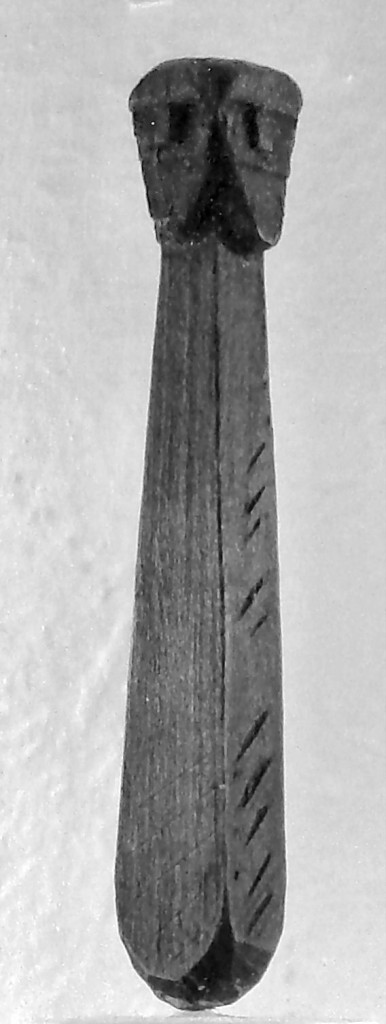
The Slavic sun god was Svetovid, who was represented with four heads looking in opposite directions. Svetovid (the all seeing, or the one who gives sight, who allows us to see the world). It is Svetovid (The Sun) who rules during the white (hot) part of the year. Hence four heads.
Słowiański bóg słońca to Świętowit, którego przedstawiano z czterema głowami zwróconymi w przeciwnych kierunkach. Świętowit (ten, który wszystko widzi, czyli ten, który daje wzrok i pozwala nam widzieć świat). To Świętowit (Słońce) rządzi w białej (gorącej) porze roku. Stąd cztery głowy.
This is one of four Svetovid wood figures with four faces from 9th or 10th century used for home worship, Wolin, Pomerania (today Poland).
To jedna z czterech drewnianych figurek Świętowita z czterema twarzami z IX lub X wieku, używanych do kultu domowego w Wolinie na Pomorzu (dzisiejsza Polska).
I talked about the meaning of his name in my post „The horseman„.
O znaczeniu jego imienia pisałem w poście „Jeździec”.
Tree of life
Drzewo Życia
The tree of life represents the fertile part of the year which corresponds to the hot part of the year which is symbolised by all the above symbols…This is broadly the period spanning summer and autumn, the so called „white part of the year” in Serbian calendar.
Drzewo Życia reprezentuje urodzajną część roku odpowiadająca gorącej części roku, symbolizowanej przez wszystkie powyższe symbole… Jest to ogólnie okres obejmujący lato i jesień, tzw. „biała część roku” w kalendarzu serbskim.
In my post „Two crosses” I talked about the division of the solar year using solar cross (solstices and equinoxes) and earth cross (quarter days). The second solar year devision is at the core of the Celtic and Serbian calendar.
W moim poście „Dwa krzyże” pisałem o podziale roku słonecznego za pomocą krzyża słonecznego (przesilenia i równonoce) oraz krzyża ziemskiego (ćwierćdni). Drugi podział roku słonecznego stanowi rdzeń kalendarza celtyckiego i serbskiego.
In Celtic calendar the year is divided into two main parts (white and dark part of the year) by Bealtaine – the beginning of the summer and Samhain – the beginning of the winter.
W kalendarzu celtyckim rok podzielony jest na dwie główne części (białą i ciemną część roku) przez Bealtaine – początek lata i Samhain – początek zimy.
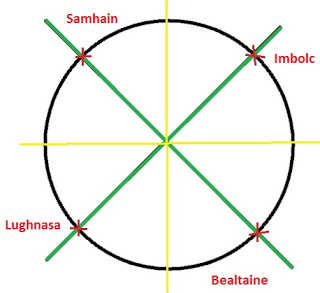
In Serbian calendar the year is divided into two main parts (white and dark part of the year) by St George’s day – the beginning of the summer and St Mitar’s day – the beginning of the winter.
W kalendarzu serbskim rok podzielony jest na dwie główne części (białą i ciemną część roku) przez dzień św. Jerzego – początek lata i dzień św. Mitara – początek zimy.
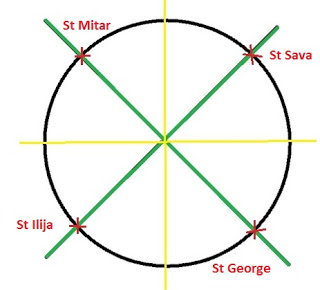
All together the symbols on the St Austell font create the full representation of a very specific point on the solar year: Lughnasadh, St Elijah the Thunderer day, Perun’s day. The beginning of Autumn (Harvest). It is the moment when Dragon gets killed in the middle of Leo, in the middle of the period between the arrival and the departure of the migrating birds….
Wszystkie symbole na chrzcielnicy St Austell tworzą pełne przedstawienie bardzo konkretnego punktu w roku słonecznym: Lughnasadh, dnia św. Eliasza Gromowładnego, dnia Peruna. Początek Jesieni (Żniw). To moment, w którym Smok zostaje zabity w środku znaku Lwa, w połowie okresu między przylotem a odlotem ptaków wędrownych…
Not something you would expect 🙂 to find on a Norman font…
Nie spodziewałbyś się 🙂 czegoś takiego na chrzcielnicy normańskiej…
But then, Normans were eventual product of Danish, Norse and Slavic mix. So who knows, maybe this is how all of this somehow ended up in the Norman churches…Who knows…
Ale przecież Normanowie byli ostatecznie produktem mieszanki duńskiej, nordyckiej i słowiańskiej. Więc kto wie, może właśnie w ten sposób to wszystko trafiło do normańskich kościołów… Kto wie…
O and just so you don’t think that I am over-interpreting random bunch of decorative motifs only present on one isolated Norman font made by a stoned stone mason 🙂.
O, i żebyś nie pomyślał, że nadinterpretuję losowy zbiór motywów dekoracyjnych, obecnych tylko na jednej, odizolowanej chrzcielnicy normańskiej, wykonanej przez kamieniarza 🙂.
Here is another font with the same decorations, this one from the St Sampson church at South Hill, Cornwall (pics by Richard Jewell)
Oto kolejna chrzcielnica z tymi samymi zdobieniami, pochodząca z kościoła św. Sampsona w South Hill w Kornwalii (zdjęcia Richarda Jewella).
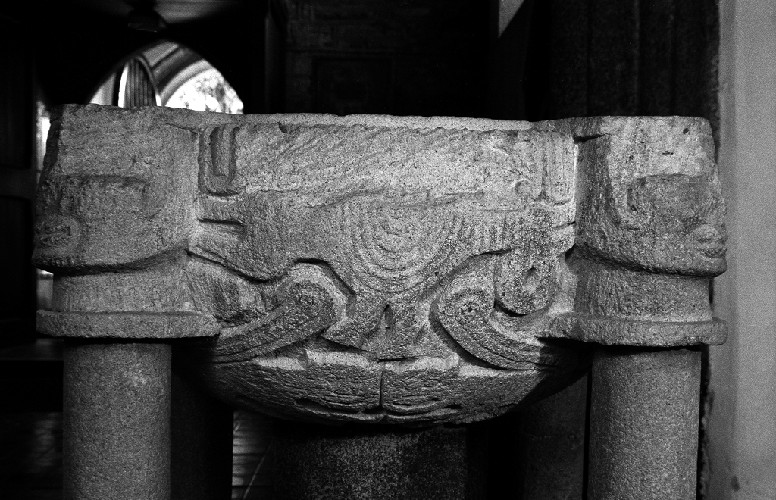
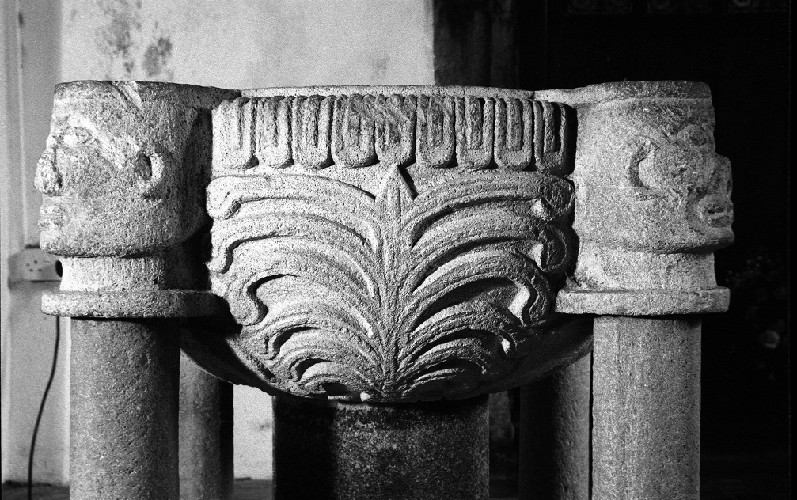
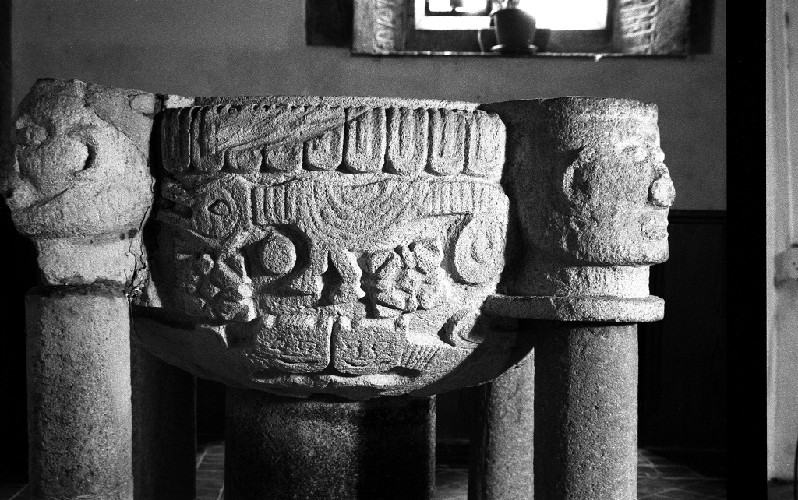
And here is another one which is even better. This is the font form the St Cyriacus and St Julitta church at Luxulyan Cornwall. Pics by Roy Reed
A oto kolejna, jeszcze lepsza. To czcionka z kościoła św. Cyriaka i św. Julity w Luxulyan w Kornwalii. Zdjęcia Roya Reeda.
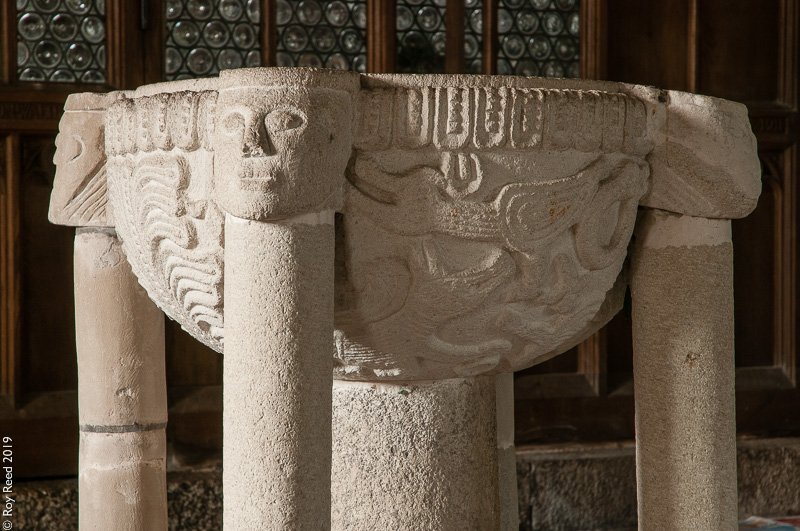
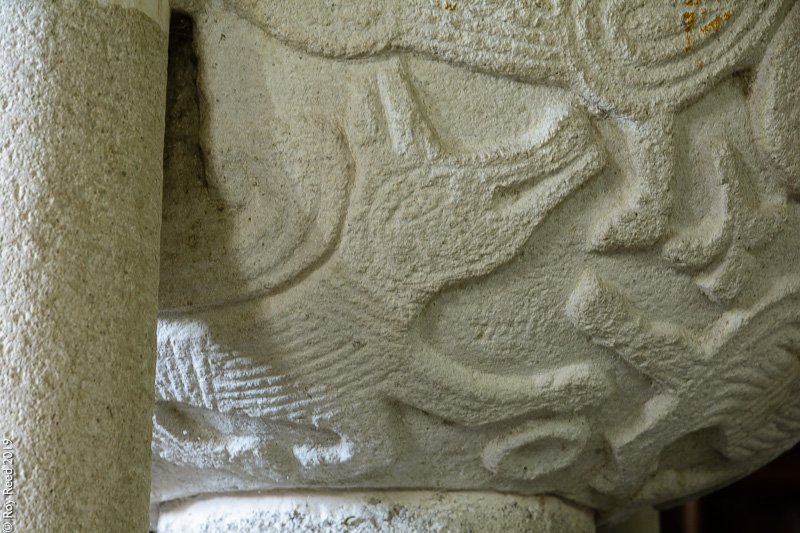
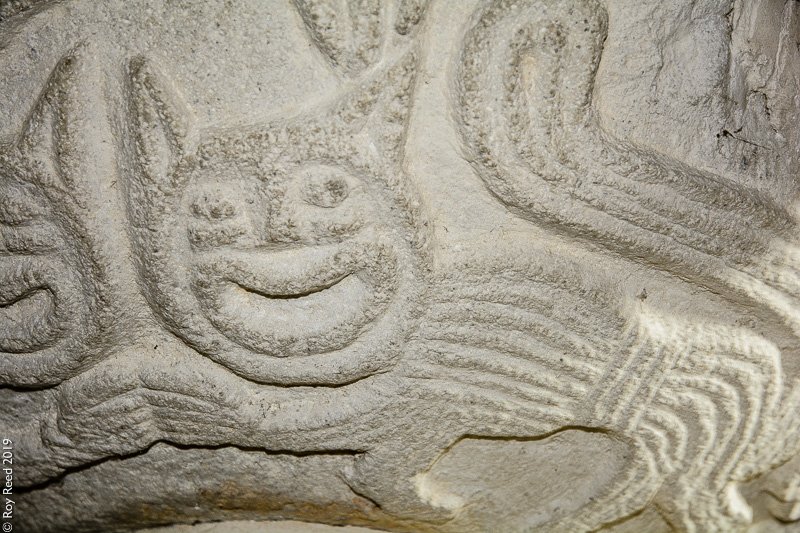
The court heads, tree of life, dragons and lions are still there. But now we have dogs instead of birds. Thepoint on the solar year that both of these fonts represent: 2nd of August, Lughnasadh, St Elijah the Thunderer day, Perun day, The beginning of Autumn (Harvest), the period of the maximum sun’s heat, is also known as dog days…
Posągi czterogłowe, drzewo życia, smoki i lwy nadal tam są. Ale teraz zamiast ptaków mamy psy. Punkt w roku słonecznym, który reprezentują obie te chrzcielnice: 2 sierpnia, Lughnasadh, dzień św. Eliasza Gromowładnego, dzień Peruna, początek jesieni (żniwa), okres największego upału słonecznego, znany również jako psie dni…
Interesting right?
Interesujące, prawda?
źródło: https://oldeuropeanculture.blogspot.com/2019/04/st-austell-font.html