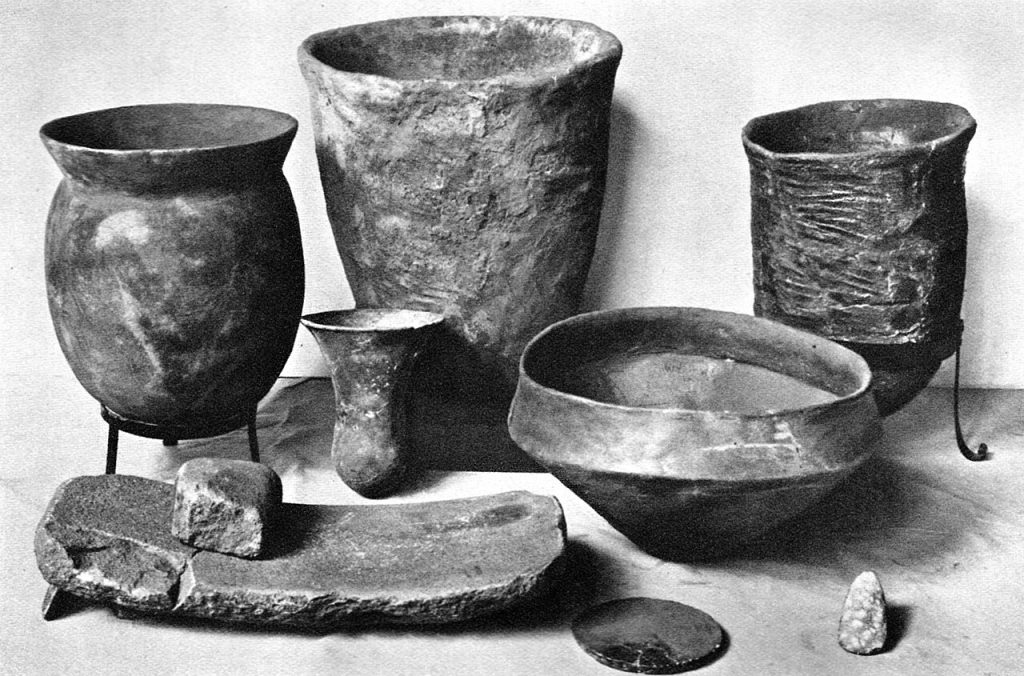
Od Poli Dec
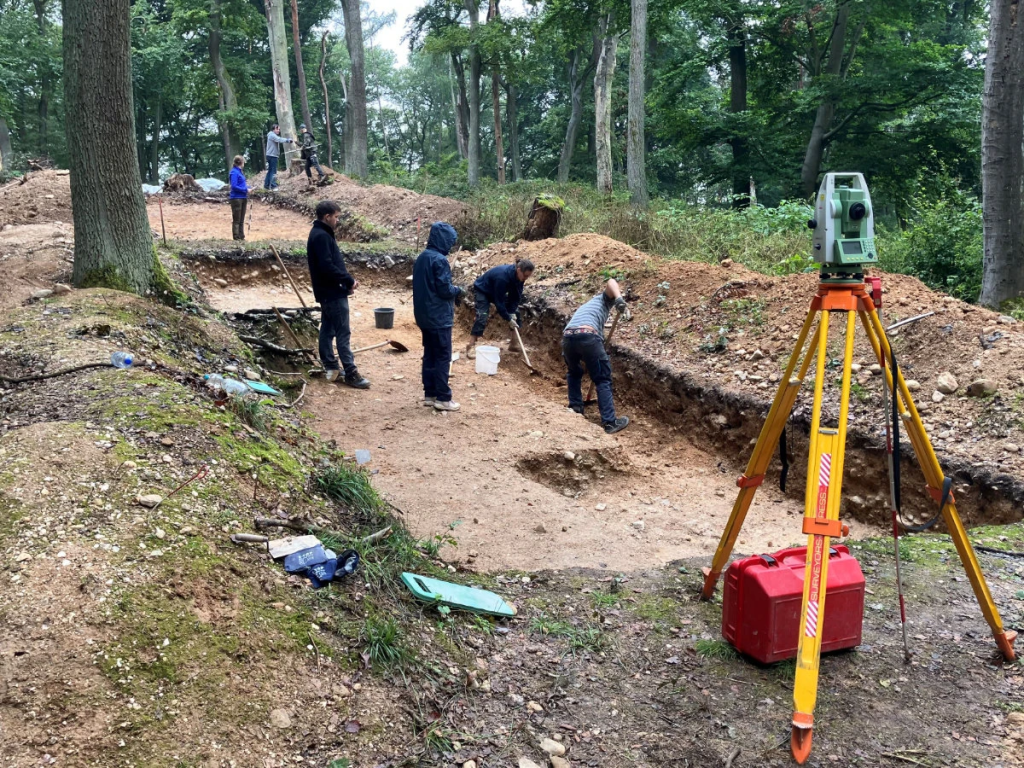
Wzgórze Kapellenberg w niemieckiej Hesji skrywało przez milenia niezwykłą tajemnicę. Archeolodzy odsłonili właśnie pozostałości po jednym z najciekawszych neolitycznych obiektów w Europie. Zmienia on nasze wyobrażenie o społecznościach sprzed sześciu tysięcy lat. To, co początkowo wydawało się standardowym wykopaliskami, szybko przerodziło się w fascynujące śledztwo dotyczące złożoności życia w epoce kamienia. Okazuje się, iż monumentalna struktura pełniła podwójną funkcję, łącząc sacrum z pragmatyzmem dawnych mieszkańców.
Niezwykły kurhan w sercu największej neolitycznej osady
Struktura na Kapellenberg imponuje rozmiarami, ponieważ ma 90 metrów średnicy i zbudowana jest z warstwy okrągłych kamyków. Badania prowadzone od 2008 roku ujawniły, że kurhan stanowił część rozległego kompleksu osadniczego kultury Michelsberg, funkcjonującego między 4200 a 3500 rokiem p.n.e. Osada zajmowała imponujący obszar 45 hektarów, co czyniło ją jednym z największych tego typu założeń w ówczesnej Europie. Do dziś widoczne są ślady dawnych wałów obronnych, wznoszonych systematycznie przez pięć stuleci. Tegoroczna kampania wykopaliskowa, zakończona 19 września 2025 roku, zamknęła wstępną fazę badań tego unikalnego monumentu.
Co ciekawe, kurhan nie służył wyłącznie jako miejsce pochówku. Neolityczni budowniczowie wykazali się praktycznym podejściem, integrując funkcje ceremonialne z obronnymi. Ta wielofunkcyjność każe zastanowić się nad tym, na ile nasze współczesne kategorie odbierają złożoność dawnych społeczeństw. Zdaniem badaczy, społeczności rolnicze przybyły na Kapellenberg z terenów dzisiejszej Francji około 4100 roku p.n.e. Strategiczną lokalizację na grzbiecie wzgórza wybrano nieprzypadkowo. Miała ona wymiar zarówno praktyczny, jak i symboliczny.
Wzgórze było powszechnie widocznym symbolem identyfikacji dla ludności przybyłej z Francji, prawdopodobnie początkowo ogrodzonym monumentem grobowym i być może warownią – wyjaśnia archeolog Detlef Gronenborn
Artefakty świadczące o statusie elit
Wnętrze kurhanu kryło niezwykłe znaleziska, takie jak ceremonialne topory wykonane z jadeitu i amfibolitu. Surowce te pochodziły najprawdopodobniej z Alp Zachodnich, co świadczy o rozległych kontaktach handlowych utrzymywanych przez tę społeczność. Obecność takich przedmiotów wyraźnie wskazuje na pochówek przedstawicieli politycznej elity z końca V tysiąclecia p.n.e. Niestety, komora grobowa uległa zniszczeniu prawdopodobnie w XIX wieku podczas prac leśnych, co utrudnia pełne odtworzenie pierwotnego wyposażenia.
Historia Kapellenberg to opowieść o nieustannych wyzwaniach. Około 3900 roku p.n.e., po dwustuletniej przerwie, ludzie powrócili na wzgórze, rozpoczynając stopniową degradację pierwotnego założenia. Warstwy spalenizny wyraźnie dokumentują gwałtowne konflikty zbrojne. Około 3700 roku p.n.e. nastąpiło opuszczenie okolicznych osad i koncentracja ludności na łatwiejszym do obrony szczycie góry. Kryzys klimatyczny około 4000 roku p.n.e. dotknął całą Europę, prowadząc do upadku wielu kultur. Kapellenberg należało do nielicznych miejsc, które przetrwały ten trudny okres.
Okres około 4000 roku p.n.e. był naznaczony wieloma kryzysami. Z powodu mniejszego nasłonecznienia klimat stał się zmienny, rolnicy musieli znosić nieurodzaje, wielu ludzi głodowało – dodaje Gronenborn
Po przezwyciężeniu kryzysu nastąpił wyraźny wzrost populacji. Na Ukrainie powstawały osady liczące nawet dziesięć tysięcy mieszkańców, podczas gdy w Hofheim na wzgórzu mogło żyć około tysiąca osób.
Znaczenie odkryć z perspektywy współczesności
Na 2026 rok zaplanowano dalsze, bardziej szczegółowe badania oraz analizę zgromadzonych danych. Archeolodzy zamierzają stworzyć dokładne mapy i modele 3D, które pomogą lepiej zrozumieć funkcjonowanie tej niezwykłej osady. Kapellenberg nie istniał w izolacji. Wraz z innymi osadami tworzył swego rodzaju protomiejski krajobraz, będący zapowiedzią późniejszych form urbanistycznych. Konflikty zbrojne dokumentowane na stanowisku, które prowadziły do rozbudowy fortyfikacji i ostatecznie migracji, stanowią pouczający przykład wzorców społecznych aktualnych także dzisiaj.
Dwadzieścia lat temu nie sądziłem, że zajdziemy tak daleko – podsumowuje Gronenborn
Odkrycia na Kapellenberg pokazują, że neolityczne społeczności były bardziej złożone, niż dotąd przypuszczano. Całe stanowisko dostarcza unikalnego wglądu w życie, konflikty i zdolności adaptacyjne naszych przodków sprzed sześciu tysięcy lat.
źródło: https://www.focus.pl/artykul/grobowiec-kurhan-kapellenberg-neolit#goog_rewarded
Kultura Michelsberg
Kultura michelsberg to prehistoryczna kultura, która rozwijała się w epoce miedzi około 3300–2700 p.n.e. na terenach Belgii, Nadrenii i północno-wschodniej Francji, a w w zachodniej i środkowej części Czech obejmowała okres ok. 4100–3800 p.n.e.. Charakteryzują ją osady z rowami i palisadami, a szczególnie charakterystyczne są dla niej naczynia typu „tulipanowatego pucharu”. Nazwa kultury pochodzi od wzgórza Michelsberg w pobliżu Untergrombach, gdzie znajduje się ważne stanowisko archeologiczne
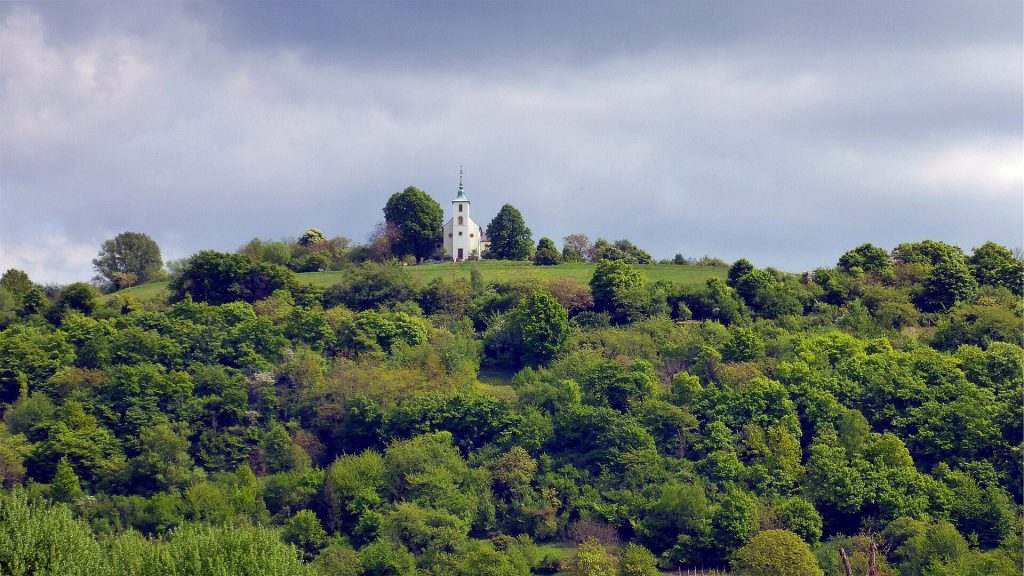
Wzgórze Michelsberg i kultura z eng wiki
Kultura Michelsberg Zasięg geograficzny Belgia, Europa Środkowa, zwłaszcza Niemcy Zachodnie. Okres Późny neolit, chalkolit Daty 4400–3500 p.n.e. Cechy charakterystyczne: puchary tulipanowe, osady na wzgórzach, ogrodzenia Poprzednia: kultura Rössen, kultura Cerny Następna: kultura pucharów lejkowatych Kultura Wartberg, kultura Pfyn
The Michelsberg culture (German: Michelsberger Kultur (MK)) is an important Neolithic culture in Central Europe. Its dates are c. 4400–3500 BC. Its conventional name is derived from that of an important excavated site on Michelsberg (short for Michaelsberg) hill near Untergrombach, between Karlsruhe and Heidelberg (Baden-Württemberg), Germany.
Kultura Michelsberg (niem. Michelsberger Kultur (MK)) to ważna kultura neolityczna w Europie Środkowej. Jej daty to ok. 4400–3500 p.n.e. Jej konwencjonalna nazwa pochodzi od nazwy ważnego stanowiska wykopaliskowego na wzgórzu Michelsberg (skrót od Michaelsberg) w pobliżu Untergrombach, między Karlsruhe a Heidelbergiem (Badenia-Wirtembergia) w Niemczech.
The Michelsberg culture belongs to the Central European Late Neolithic. Its distribution covered much of West Central Europe, along both sides of the Rhine, starting the European tradition of timber framing.[1] A detailed chronology, based on pottery, was produced in the 1960s by the German archaeologist Jens Lüning.
Kultura Michelsberg należy do późnego neolitu środkowoeuropejskiego. Jej zasięg obejmował znaczną część Europy Środkowo-Zachodniej, po obu stronach Renu, zapoczątkowując europejską tradycję budownictwa szkieletowego.[1] Szczegółową chronologię, opartą na ceramice, opracował w latach 60. XX wieku niemiecki archeolog Jens Lüning.
History
The Michelsberg culture emerges in northeastern France c. 4400 BC.[2][3][4] Genetic evidence suggests that it originated through a migration of peoples from the Paris Basin.[2] Its people appear to trace their origins to Mediterranean farmers expanding from the southwest and of the Linear Pottery culture of Central Europe.[4]
Kultura Michelsberg pojawia się w północno-wschodniej Francji ok. 4400 r. p.n.e.[2][3][4] Dowody genetyczne sugerują, że powstała w wyniku migracji ludów z Basenu Paryskiego.[2] Jej mieszkańcy wydają się wywodzić swoje korzenie od śródziemnomorskich rolników, którzy rozprzestrzenili się z południowego zachodu, oraz od kultury ceramiki wstęgowej wstęgowej Europy Środkowej.[4]
Shortly after its emergence in northeastern France, the Michelsberg culture expands rapidly throughout central Germany, northeastern France, eastern Belgium, and the southwestern Netherlands.[3] These areas had previously been occupied by cultures derived from the Linear Pottery culture (LBK), with whom the Michelsberg culture shares surprisingly little cultural or genetic affinity.[4] Archaeological evidence suggests that the Michelsberg expansion was accompanied by violence.[5] The Michelsberg culture has strong affinities to the Chasséen culture of central France.[6] Archaeological evidence strongly suggests that colonists from the Michelsberg culture played an instrumental role in establishing the Funnelbeaker culture of Northern Europe, which brought agriculture to southern Scandinavia.[3][7] The Michelsberg culture also displays close affinities to the cultures of the Neolithic British Isles. The spread of agriculture into the British Isles by colonists from the continent happens at almost exactly the same time as in Scandinavia, suggesting that the two events are connected.[8]
Krótko po pojawieniu się w północno-wschodniej Francji kultura Michelsberg szybko rozprzestrzenia się w środkowych Niemczech, północno-wschodniej Francji, wschodniej Belgii i południowo-zachodniej Holandii[3]. Obszary te były wcześniej zajmowane przez kultury wywodzące się z kultury ceramiki wstęgowej rytej (LBK), z którą kultura Michelsberg łączy zaskakująco mało pokrewieństwa kulturowego i genetycznego.[4] Dowody archeologiczne sugerują, że ekspansji Michelsberg towarzyszyła przemoc.[5] Kultura Michelsberg wykazuje silne pokrewieństwo z kulturą Chasséen z centralnej Francji.[6] Dowody archeologiczne jednoznacznie wskazują, że koloniści z kultury Michelsberg odegrali kluczową rolę w powstaniu kultury pucharów lejkowatych w Europie Północnej, która przyniosła rolnictwo do południowej Skandynawii.[3][7] Kultura Michelsberg wykazuje również bliskie pokrewieństwo z kulturami neolitycznych Wysp Brytyjskich. Rozprzestrzenianie się rolnictwa na Wyspy Brytyjskie przez kolonistów z kontynentu ma miejsce niemal dokładnie w tym samym czasie co w Skandynawii, co sugeruje, że oba te wydarzenia są ze sobą powiązane.[8]
The Michelsberg culture ends about c. 3500 BC.[3] It is succeeded in its core area by the Wartberg culture, with which it displays strong signs of continuity.[9]
Kultura Michelsberg kończy się około 3500 r. p.n.e.[3] W swoim centralnym obszarze zastępuje ją kultura Wartberg, z którą wykazuje wyraźne oznaki ciągłości.[9]
Settlements – Osady
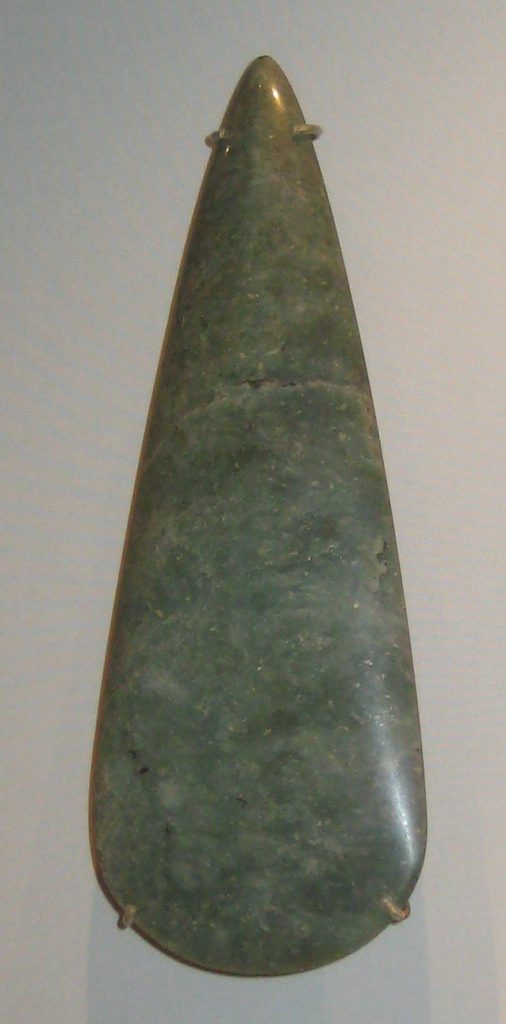
Osady Neolityczny topór jadeitowy
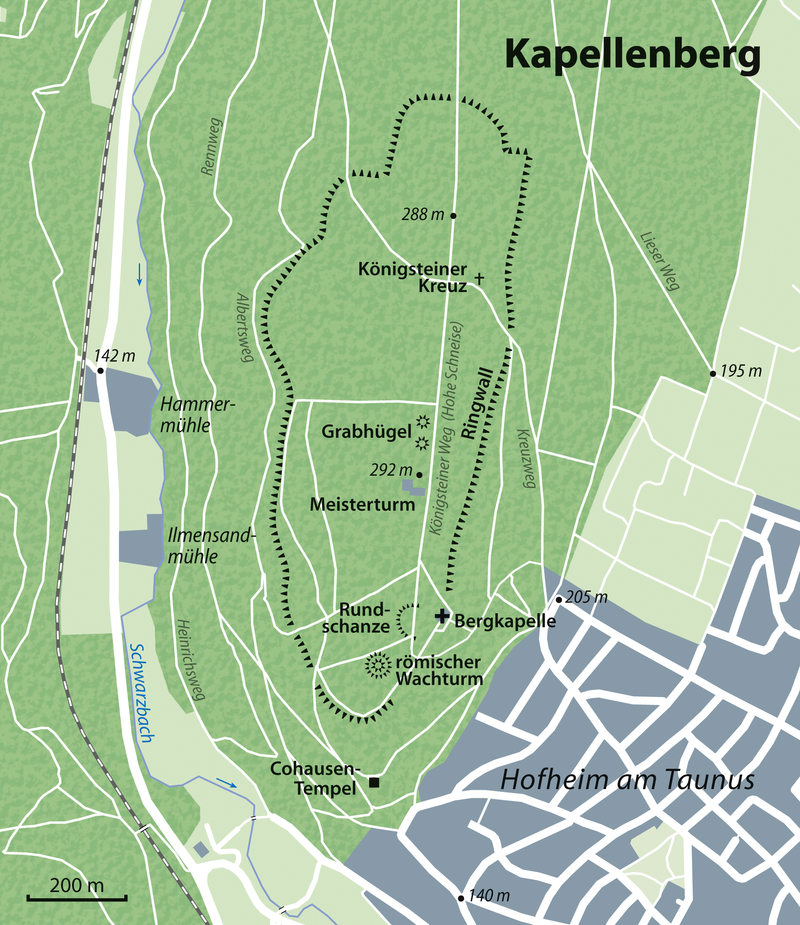
Mapa wałów obronnych i kurhanu Kappellenberg
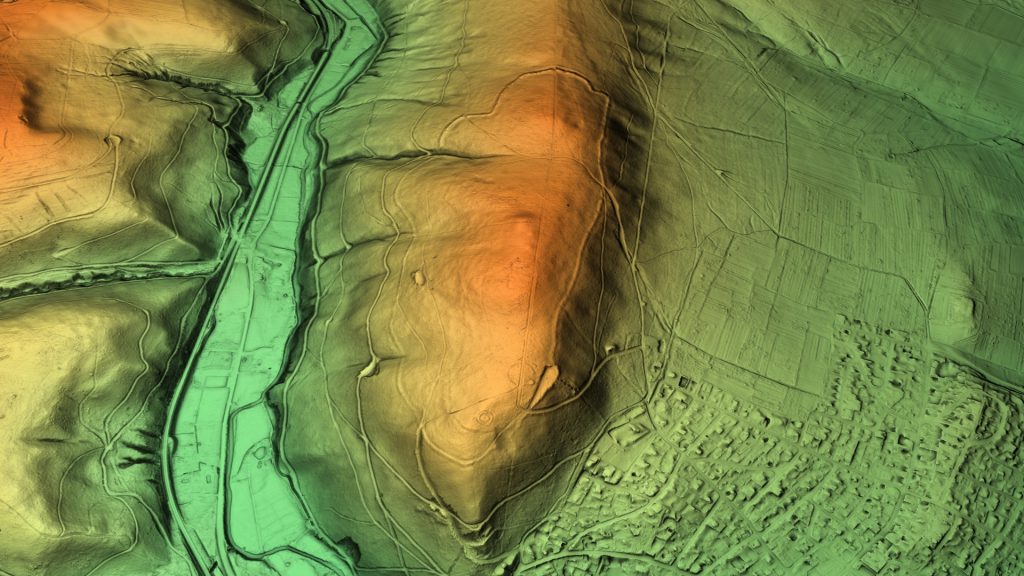
Topografia wałów obronnych Kappellenberg
Since 2008 the fortified settlement of Kapellenberg near Hofheim and Frankfurt (one of the largest of the Michelsberg culture) has been investigated by the Römisch-Germanisches Zentralmuseum, Leibniz Archaeological Research Institute. The settlement has been described as representing „the beginnings of urbanism”, already in 4000 BC.[10] The overall site was 45 hectares in size with an internal settlement covering 26 hectares, containing numerous rectangular houses and surrounded by a rampart.[11][12][13] A large tumulus (burial mound) was built at the centre of the settlement between 4200–4100 BC, indicating the influence of the Castellic culture in Brittany,[14] where giant burial mounds containing megalithic tombs (such as Tumiac and Saint-Michel) were built c. 4500 BC for elite males described by some researchers as 'divine kings’.[15][16] The Castellic mounds contained large quantities of jade axes (the jade originally imported from the Italian Alps), as well jewellery made from callaïs (variscite and turquoise) imported from south-western Spain.[17] Jade axes have similarly been found at the Kappellenberg, attesting to an exchange network of prestige goods associated with elites as well as the trade in salt.[18][19] The Kappellenberg tumulus and jade axes indicate that „a socio-political hierarchisation process linked to the emergence of high-ranking elites” was underway in the Rhine valley at the same time as similar developments were occurring in Brittany (Castellic culture) and the Paris basin (Cerny culture).[20]
Od 2008 roku ufortyfikowana osada Kapellenberg w pobliżu Hofheim i Frankfurtu (jedna z największych osad kultury Michelsberg) jest badana przez Römisch-Germanisches Zentralmuseum, Instytut Badań Archeologicznych im. Leibniza. Osada została opisana jako reprezentująca „początki urbanizacji” już w 4000 r. p.n.e.[10] Całkowita powierzchnia stanowiska wynosiła 45 hektarów, z osadą wewnętrzną zajmującą 26 hektarów, zawierającą liczne prostokątne domy i otoczoną wałem obronnym.[11][12][13] W centrum osady w latach 4200–4100 p.n.e. zbudowano duży kopiec (kopiec grobowy), co wskazuje na wpływ kultury kastelickiej w Bretanii[14], gdzie ok. 4500 p.n.e. zbudowano gigantyczne kopce grobowe zawierające megalityczne grobowce (takie jak Tumiac i Saint-Michel) dla elitarnych mężczyzn, określanych przez niektórych badaczy mianem „boskich królów”[15][16]. Kopce kastelickie zawierały duże ilości siekier z jadeitu (pierwotnie importowanego z włoskich Alp), a także biżuterię wykonaną z kalii (waryscytu i turkusu) importowanej z południowo-zachodniej Hiszpanii[17]. Podobnie siekiery z jadeitu znaleziono w Kappellenberg, co świadczy o sieci wymiany dóbr prestiżowych związanych z elitami, a także o handlu solą[18][19]. Kurhan z Kappellenberg i topory jadeitowe wskazują, że w dolinie Renu, w tym samym czasie, co podobne zmiany miały miejsce w Bretanii (kultura kastelicka) i Kotlinie Paryskiej (kultura Cerny), toczył się „proces hierarchizacji społeczno-politycznej związany z pojawieniem się elit wysokiego szczebla”.[20]
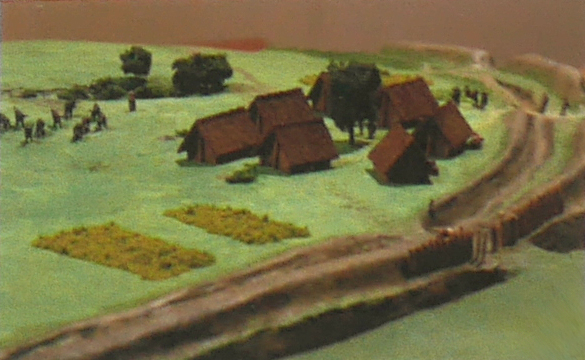
The settlement at Schierstein might have housed up to several thousand inhabitants.[21]
Osada w Schierstein mogła liczyć nawet kilka tysięcy mieszkańców.
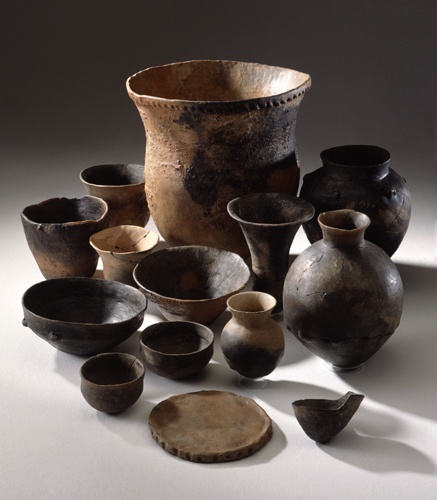
Economy – gospodarka
Research so far tends to characterise MK as a culture that avoided or rejected the use of copper, but occasional finds, e.g. at Heilbronn-Klingenberg, do indicate use of that metal.
Dotychczasowe badania wskazują na tendencję do charakteryzowania MK jako kultury, która unikała lub odrzucała użycie miedzi, jednak sporadyczne znaleziska, np. w Heilbronn-Klingenberg, wskazują na używanie tego metalu.