
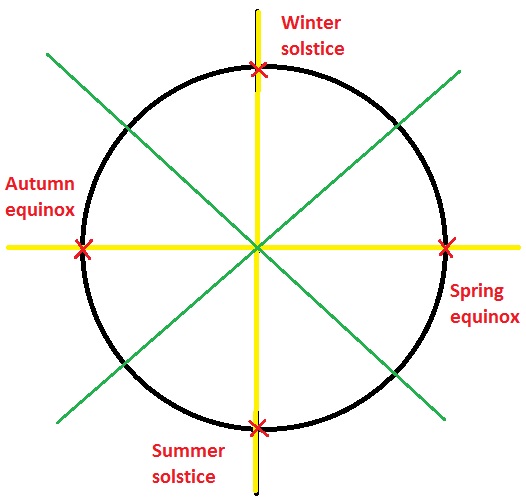
To jest krzyż słoneczny. Oznacza on punkty przejściowe w cyklu słonecznym na półkuli północnej:
This is Sun’s sunlight cross. It marks the transitional points on the sunlight cycle in the northern hemisphere:
1. Przesilenie zimowe – najkrótszy dzień i najdłuższa noc
2. Równonoc wiosenna – równy dzień i noc
3. Przesilenie letnie – najdłuższy dzień i najkrótsza noc
4. Równonoc jesienna – równy dzień i noc
1. Winter solstice – the shortest day and the longest night
2. Spring equinox – the equal day and night
3. Summer solstice – the longest day and shortest night
4. Autumn equinox – the equal day and night
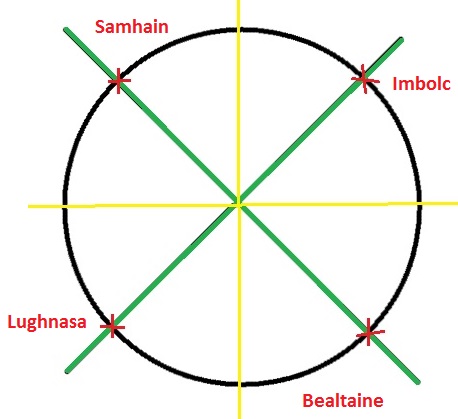

To jest krzyż ziemski, klimatu i roślinności. Oznacza punkty przejściowe w cyklu klimatycznym i wegetacyjnym na półkuli północnej:
Kalendarz celtycki:
This is Earth’s, climate, vegetation cross. It marks the transitional points of the climatic, vegetative cycle in the northern hemisphere:
Celtic calendar:
1. Imbolc – początek wiosny
2. Bealtaine – początek lata
3. Lughnasa – początek jesieni
4. Samhain – początek zimy
1. Imbolc- the beginning of the spring
2. Bealtaine – the beginning of the summer
3. Lughnasa – the beginning of the autumn
4. Samhain – the beginning of the winter

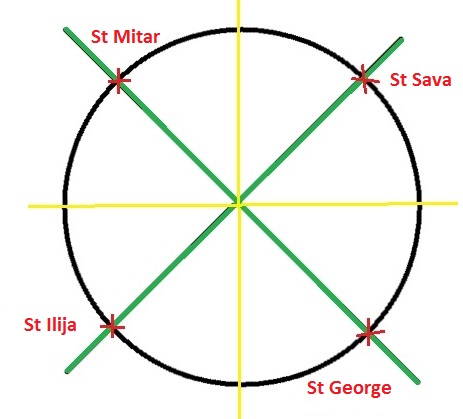
Kalendarz serbski:
1. Święty Sawa – początek wiosny
2. Święty Jerzy – początek lata
3. Święty Ilija – początek jesieni
4. Święty Mitar – początek zimy
Serbian calendar:
1. St Sava – the beginning of the spring
2. St George – the beginning of the summer
3. St Ilija – the beginning of the autumn
4. St Mitar – the beginning of the winter
Jak widać, krzyż słoneczny i krzyż ziemski nie są zsynchronizowane. Krzyż ziemski jest obrócony do przodu o 45 stopni, a punkty kardynalne koła ziemskiego znajdują się dokładnie pomiędzy punktami kardynalnymi koła słonecznego. Dzieje się tak, ponieważ ziemski cykl klimatyczny i wegetacyjny jest opóźniony w stosunku do cyklu słonecznego.

As you can see the sun cross and earth cross are out of sync. The earth cross is rotated forward by 45 degrees and the earth circle cardinal points fall right in between the sun circle cardinal points. This is because the earth climatic, vegetative cycle lags behind the solar cycle.
Przesilenie zimowe (21 grudnia) jest najkrótszym dniem. Spodziewalibyśmy się więc, że będzie to również najzimniejszy dzień. Spodziewalibyśmy się również, że od tego dnia, wraz z wydłużaniem się dni, będą one również cieplejsze. Ale jak wszyscy wiemy, tak nie jest. Dni rzeczywiście stają się dłuższe, ale Ziemia nadal się ochładza. Dopiero na początku lutego zaczynamy dostrzegać pierwsze oznaki ocieplenia. Właśnie dlatego początek wiosny przypada na początek lutego (Imbolc, święto św. Sawy (14 stycznia, ale prawdopodobnie jest to zamiennik dawnego Imbolc, obchodzonego 1 lutego)). Prawdziwy środek przypada na 4 lutego, który przypada dokładnie w środku znaku Wodnika (21 stycznia – 19 lutego).
Winter solstice (21st of December) is the the shortest day. So we would expect that this is also the coldest day. We would also expect that from that day on, as the days start getting longer, the days also start getting warmer. But as we all know, this is not the case. The days do get longer, but the earth continues to cool. It is only at the beginning of February that we start seeing the first signs of the earth warming up. This is why the beginning of spring is at the beginning of February (Imbolc, St Sava (14th of January, but probably a replacement for the old Imbolc which is celebrated on the 1st of February)). The actual mid point is 4th of February. Which falls right in the middle of Aquarius (21 January – 19 February).
Równonoc wiosenna (21 marca) to moment, w którym dzień jest tak długi jak noc. Od tego dnia dni są dłuższe niż noce. Spodziewalibyśmy się, że to oznacza początek lata. Ale prawdziwe upały zaczynają się dopiero na początku maja. Dlatego początek lata przypada na początek maja (Bealtaine, które obecnie obchodzone jest 1 maja, ale istnieją przesłanki wskazujące na to, że kiedyś obchodzono je 6 maja. Tutaj znajdujemy dzień św. Jerzego obchodzony 23 kwietnia, prawdopodobnie w miejsce dawnego Bealtaine). Prawdziwy środek lata przypada na 6 maja, który przypada dokładnie w środku znaku Byka (21 kwietnia – 21 maja).
Spring equinox (21st of March) is the moment when the day is as long as night. From that day the days are longer than nights. We would expect that this would mark the beginning of the summer. But the real heat does not start until the beginning of May. This is why the beginning of summer is at the beginning of May (Bealtaine, which is today celebrated on the 1st of May, but there are indications that it was once celebrated on the 6th of May. Here we find St George’s day celebrated on the 23 of April, probably replacement for old Bealtaine). The actual mid point is 6th of May. Which falls right in the middle of Taurus (21 April – 21 May).
Przesilenie letnie (21 czerwca) to najdłuższy dzień w roku. Spodziewalibyśmy się, że będzie to również najgorętszy dzień w roku. Spodziewalibyśmy się również, że od tego dnia, wraz ze skracaniem się dni, będą one również chłodniejsze. Ale, jak wszyscy wiemy, tak nie jest. Dni rzeczywiście stają się krótsze, ale Ziemia nadal się ociepla. Dopiero na początku sierpnia zaczynamy dostrzegać pierwsze oznaki ochłodzenia Ziemi. Dlatego początek jesieni przypada na początek sierpnia (Lughnasa, które obecnie obchodzone jest 1 sierpnia, ale kiedyś prawdopodobnie obchodzono je 2 sierpnia. Tutaj znajdujemy dzień św. Eliasza obchodzony 20 lipca, prawdopodobnie jako zamiennik dawnego Lughnasa). Rzeczywisty środek przypada na 2 sierpnia, który przypada dokładnie w środku znaku Lwa (23 lipca – 22 sierpnia).
Summer solstice (21st of June) is the longest day of the year. We would expect that this would also be the hottest day of the year. We would also expect that from that day on, as the days get shorter, the days also get colder. But again as we all know, that is not the case. The days do get shorter, but earth continues to warm. It is only at the beginning of August that we start seeing first sings of earth cooling down. This is why the beginning of autumn is at the beginning of August (Lughnasa which is today celebrated on the 1st of August but was once probably celebrated on the, 2nd of August. Here we find St Ilija’s day celebrated on the 20th of July, probably replacement for old Lughnasa). The actual mid point is 2nd of August. Which falls right in the middle of Leo (23 July – 22 August).
Równonoc jesienna (21 września) to moment, w którym dzień jest tak długi jak noc. Od tego dnia dni są krótsze od nocy. Można by się spodziewać, że to oznacza początek zimy. Ale prawdziwe mrozy zaczynają się dopiero na początku listopada. Dlatego początek zimy przypada na początek listopada (Samhain, St Mitar (26 października, ale prawdopodobnie jako zamiennik dawnego Samhain, obchodzonego 31 października)). Rzeczywisty środek przypada na 5 listopada. Który przypada dokładnie w środku Orła (Skorpiona) (24 października – 22 listopada).
Autumn equinox (21st of September) is the moment when the day is as long as night. From that day the days are shorter than nights. We would expect that this would mark the beginning of the winter. But the real cold does not start until the beginning of Novermber. This is why the beginning of winter is at the beginning of November (Samhain, St Mitar (26th of October, but probably the replacement for the old Samhain which is celebrated on the 31st of October)). The actual mid point is 5th of November. Which falls right in the middle of Eagle (Scorpio) (24 October – 22 November).
Ten ostatni rysunek przedstawia diagram transformacji cyklu słonecznego Słońca w ziemski cykl klimatyczno-wegetatywny.
This last drawing is the diagram of transformation of Sun’s sunlight cycle into Earth’s climatic, vegetative cycle.
Krzyż Słońca przechodzi w krzyż Ziemi. To przejście jest regulowane przez powolną akumulację i uwalnianie ciepła, które jest przekazywane ze Słońca na Ziemię poprzez światło słoneczne…
The Sun cross transitions into the Earth cross. This transition is governed by the slow accumulation and release of the heat which is transferred from the Sun to the Earth through sunlight…
Czy ten złoty krzyż, symbolizujący przemianę światła w ciepło, w energię życiową, przypomina Ci coś?
Does this golden cross which symbolizes this transition of light into heat into life energy remind you of anything?
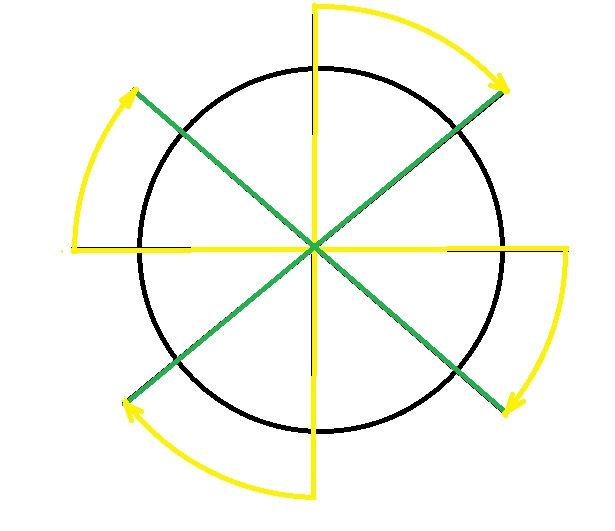

This is the never ending wheel of life…
To niekończące się koło życia…
PS: Wygląda na to, że Anglosasi mieli ten sam, rotacyjny kalendarz wegetatywny…
PS: It seems that AngloSaxons had the same rotated vegetative calendar…
źródło: https://oldeuropeanculture.blogspot.com/2016/07/two-crosses.html